| CE Credits | Validity | Cost | Duration | ECC | Exam Attempts | Wallet Card |
|---|---|---|---|---|---|---|
| 6.0 | 2 Years | $36.95 | 1-2 Hrs | Compliant | Unlimited | Download/Print/Mail |





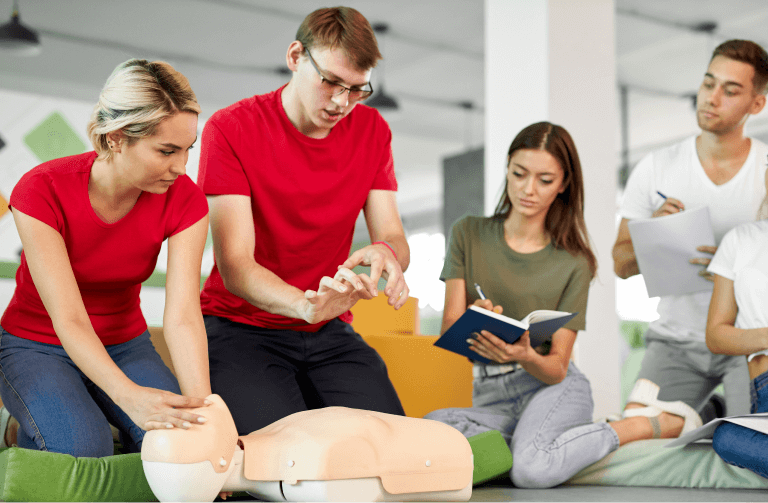
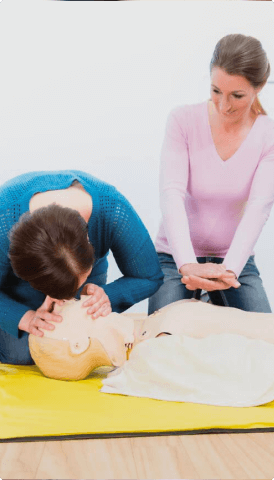
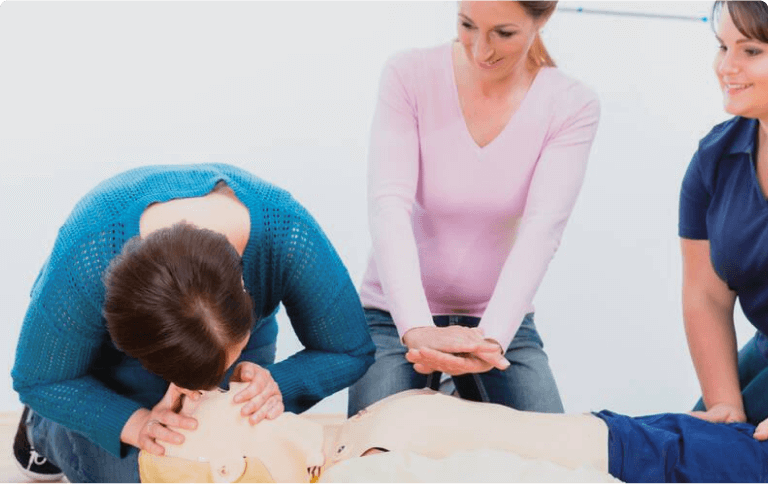
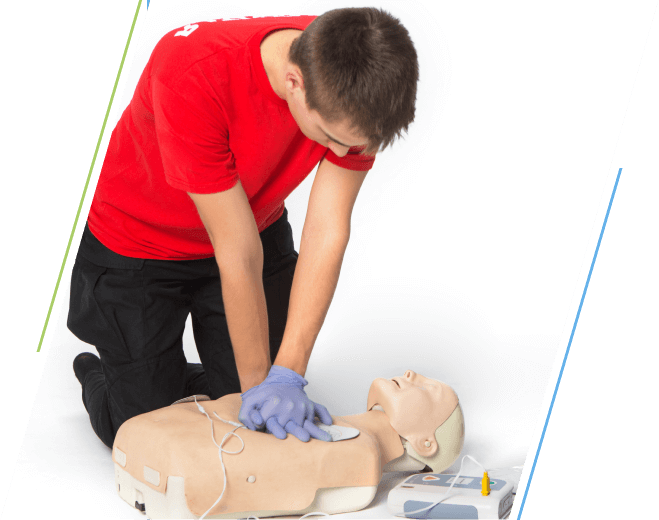
Basic Life Support refers to an emergency medical procedure that focuses on maintaining the airway, breathing, and circulation through CPR for individuals who are experiencing life-threatening illnesses or injuries. Its main aim is to sustain life until advanced care arrives.
Here are the reasons that make a BLS certificate important:
There are numerous advantages of the BLS certification course such as the following:
1. Who should take the BLS certification course?
BLS certification is designed for healthcare professionals such as doctors, nurses, and paramedics, as well as first responders, lifeguards, and public safety personnel whose roles require documented resuscitation competency beyond standard lay-responder CPR. It is also a common requirement for dental staff, respiratory therapists, and other allied health workers in clinical or patient-facing settings. Beyond formal job requirements, anyone who wants a comprehensive understanding of how to recognize and respond to life-threatening emergencies, including cardiac arrest, choking, and airway obstruction, benefits from this training, regardless of whether their employer specifically mandates it.
2. What are the highlights of the BLS course?
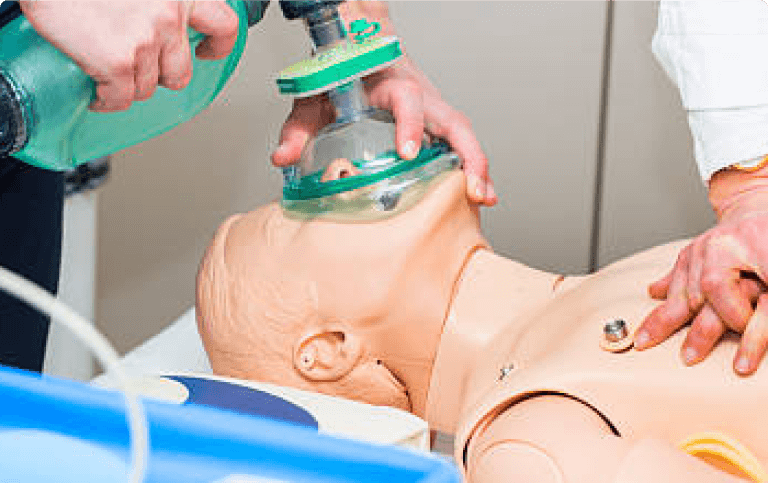
The BLS certification course covers a comprehensive set of core resuscitation skills: recognizing and assessing life-threatening emergencies effectively, administering high-quality chest compressions and rescue breaths, and correctly timing AED use to restore a normal heart rhythm. It also addresses early recognition and intervention for choking and airway obstruction across all age groups, along with advanced airway management techniques used in clinical settings. Team-based response skills are woven throughout, since BLS increasingly assumes coordination with other responders rather than solo action, reflecting how resuscitation actually happens in hospital and prehospital environments.
3. What should I expect from this course?
Expect a comprehensive, self-paced curriculum covering CPR technique, AED operation, and airway management delivered through instructional videos and scenario-based practice rather than passive reading. The course is structured to build from foundational concepts toward the team-based response skills that distinguish BLS from standard lay-responder CPR, including scene assessment and coordinated multi-rescuer resuscitation. You can move through the material at your own pace, revisiting any module as needed, and the final exam can be retaken as many times as necessary at no additional cost until you pass and receive your certificate.
4. How long is BLS certification valid?
BLS certification through American CPR Care Association remains valid for two years from your exam pass date. After that period, renewal through a refresher course is required to ensure your skills and knowledge stay aligned with current resuscitation guidelines, which are periodically updated as new evidence-based research becomes available. Many employers and clinical credentialing offices treat an expired BLS certification as equivalent to holding no certification at all, so renewing before your two-year window closes is important for maintaining continuous eligibility for patient-facing or safety-critical roles.
5. Do I get instant certification?
Yes. Once you complete the BLS certification course and pass the final exam, you can download and print a digital copy of your certificate immediately, with no waiting period or manual review. A physical wallet card is mailed to your registered address afterward for situations that call for a physical proof of certification. Your course dashboard remains accessible afterward, so you can re-download your digital certificate at any time during your two-year validity period if you misplace the original copy or need to provide proof of certification to a new employer.
6. What are the differences between BLS, first aid, and CPR?
BLS is the most comprehensive of the three, encompassing advanced life support techniques including CPR, AED use, airway management, and team-based resuscitation coordination designed for clinical and prehospital environments. First aid addresses the broader category of everyday injuries and medical situations, including cuts, burns, sprains, and allergic reactions, alongside basic CPR. CPR specifically refers to the technique of chest compressions and rescue breaths used during cardiac arrest, and is a core component embedded within both BLS and first aid training rather than a separate, standalone category. If your role requires the full BLS scope, our standalone CPR or first aid courses alone will not satisfy that specific requirement.
7. How long does it take to get BLS training?
Basic life support certification typically requires 3 to 4 hours to complete, combining theoretical instruction with practical skills assessment through scenario-based practice. Because the course is fully self-paced, you can spread that time across multiple sessions rather than completing it in one sitting, which many learners find easier to fit around demanding work schedules. The final exam adds a small amount of additional time and can be retaken as many times as needed if you do not pass on your first attempt, with no extra fees or waiting period between attempts.
Our Basic Life Support (BLS) Certification course is priced at $36.95 and includes 6.0 CE credit hours, a two-year certification period, and unlimited exam retakes. That single price covers the complete self-paced curriculum, including scene assessment, chest compressions, AED use, choking response, and airway management, along with a downloadable digital certificate immediately after passing and a physical wallet card mailed afterward.
Compared to in-person BLS classes, which frequently charge separately for the course, the exam, and card issuance, this course keeps the total cost predictable and eliminates the need to schedule around a fixed class time. Because BLS is often a condition of continued employment in healthcare and safety-related roles, a nationally accepted, affordably priced option removes one common barrier to staying current.
BLS and Healthcare Provider CPR cover overlapping ground, and the terms are sometimes used interchangeably, but they are evaluated differently by some employers and licensing boards. Healthcare Provider CPR, offered on this site as a separate course, focuses specifically on CPR, AED use, and choking response tailored to clinical environments. BLS is the broader credential, encompassing those same CPR skills plus additional scene assessment, team-based response coordination, and airway management techniques designed for both in-hospital and prehospital settings.
If your employer or licensing board specifies “BLS” by name, our BLS Certification course on this page is the correct fit. If your requirement instead specifies “CPR for healthcare providers,” our dedicated Healthcare Provider CPR course targets that requirement directly. When in doubt, confirming the exact credential your role requires before enrolling saves you from needing to retake a different course later.
BLS certification through American CPR Care Association is valid for two years from your exam pass date. As your renewal date approaches, a dedicated BLS recertification course reviews updated guidelines and re-tests your competency, typically in less time than the original certification requires.
Because BLS is frequently a condition of continued employment in healthcare, safety, and emergency response roles, letting your certification lapse can affect scheduling eligibility and credentialing status. Visit our BLS renewal and recertification page to check current pricing and begin your renewal before your two-year window closes.
Jumpstart your career with an OSHA certified CPR online certification

Get a free BLS course with a PALS and ACLS certification
Learn More
Our nationally accepted certification follows the latest ECC guidelines and standards.
Learn More
Enroll in a comprehensive, nationally recognized healthcare course focusing on the needs of healthcare professionals
Learn More
Gain CE credit hours with every course at ACCA.
Learn MoreOur standards align with the 2020 ECC Guidelines and the National Emergency Response Organization. If the course certification gets rejected, we will issue a refund.
Shopper Approved collects trusted reviews from customers who have made a verified purchase.
“I’m not a people’s person and don’t like to go in a large group setting for my CPR certification. When I get nervous I tend to miss questions. I really like that this site allows for me to complete the course at my own pace, from a place of comfort. In this way, I can concentrate and truly grasp the CPR course concepts. Highly recommended!”
“This program was easy to understand and well put together. We certified a group of 10 friends, and appreciated the group setup.”
The CPR training was exceptional! I prefer this to the classroom setting. I am a certified Montessori teacher and this course worked out for me and my coworkers!