| CE Credits | Validity | Cost | Duration | ECC | Exam Attempts | Wallet Card |
|---|---|---|---|---|---|---|
| 4.0 | 2 Years | $119 | 6 Hrs | Compliant | Unlimited | Download/Print/Mail |





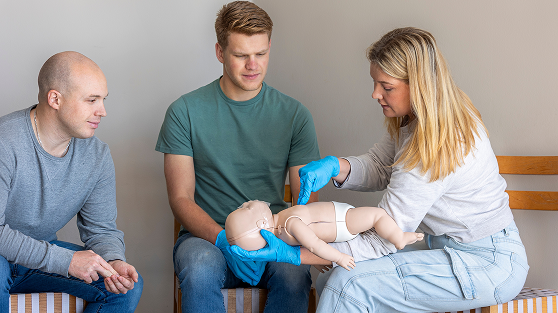
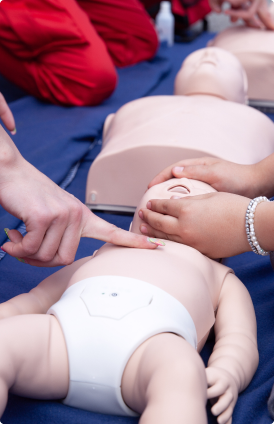
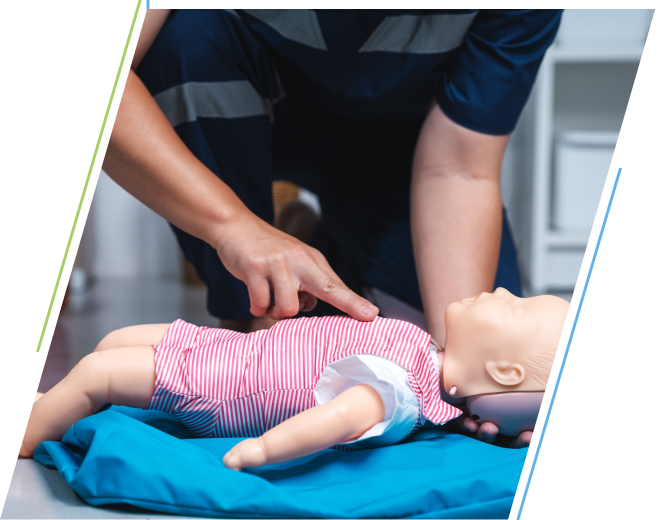
The Pediatric Advanced Life Support certification, or PALS, teaches critical skills to respond to emergencies like cardiac arrest, shock, and breathing problems in infants and children. It covers key strengths such as team communication, life-saving algorithms, and the latest pediatric care guidelines.
Choose us for accredited, up-to-date PALS training that’s fast, affordable, and trusted.
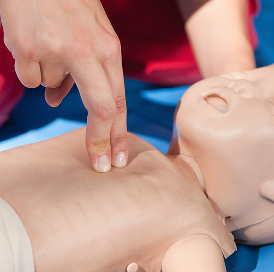
Learn life-saving pediatric skills and advance in your career with the following benefits:

Combo Details:
Combo Details:
Combo Details:
Combo Details:
Combo Details:
Combo Details:
Get Your PALS Certification & Recertification Today!
Register Now1. Do I learn through videos?
Yes. Our PALS certification course is delivered through a combination of instructional videos, interactive quizzes, and realistic case-based scenarios designed to reinforce pediatric assessment and resuscitation skills rather than simple memorization. Video demonstrations walk through pediatric-specific techniques, including medication dosing considerations and age-adjusted resuscitation sequences, so the material reflects how these skills are actually applied in a clinical setting. The interactive quiz format after each module lets you confirm understanding before moving forward, and scenario-based practice mirrors the kind of decision-making you would face during an actual pediatric emergency response.
2. How long will it take to complete this course?
On average, the PALS certification and recertification course takes about 6 hours to complete, though the course is fully self-paced, so you can pause and resume as many times as needed around your work schedule. There is no fixed class time or attendance requirement, which is particularly useful for clinical staff working rotating or unpredictable shifts. Most learners spread the 6 hours across a few sessions rather than completing it in one sitting, since the material includes both instructional content and scenario-based practice that benefits from focused attention rather than being rushed through in a single pass.
3. Do I need a medical background to take this course?
No prior medical background is strictly required to enroll, but basic knowledge of cardiopulmonary resuscitation and basic life support meaningfully helps you get more out of the material, since PALS builds directly on those foundational skills rather than teaching them from scratch. The course is specifically designed for healthcare professionals who want to specialize in treating pediatric patients, including nurses, respiratory therapists, and emergency department staff. If you have not yet completed BLS certification, we recommend starting there first, since PALS assumes that foundational competency and moves quickly into pediatric-specific advanced concepts.
4. How does PALS recertification differ from initial training?
Recertification is a more focused process than initial PALS training, built for practitioners who already hold a PALS credential rather than first-time learners. It concentrates on reviewing core pediatric resuscitation concepts through targeted refresher modules, updating your knowledge based on the latest emergency care guidelines, and reinforcing skills through challenging case scenarios rather than repeating the entire original curriculum. Recertification also verifies continued competency through a comprehensive assessment, addressing common points of confusion identified during the original certification. Because it is more targeted, recertification is typically faster to complete than initial certification while still meeting the same two-year renewal requirement.
5. What happens if I fail the PALS exam?
If you do not pass the PALS certification exam on your first attempt, you can retake it as many times as needed at no additional cost. We recommend using the practice tests included in the course to identify weaker areas before retaking the exam, since they mirror the format and difficulty of the actual assessment. There is no waiting period between attempts and no penalty for retaking, so you can retest as soon as you feel ready rather than being locked out for a set period. Most learners who initially do not pass succeed on their second attempt after reviewing the practice materials.
6. Is PALS certification the same as PALS recertification?
No. PALS certification is the complete initial course for practitioners earning the credential for the first time, covering the full pediatric resuscitation curriculum from foundational concepts through advanced scenarios. PALS recertification is a shorter, more focused course for practitioners renewing an existing credential before or shortly after it expires, concentrating on guideline updates and a competency reassessment rather than the entire original curriculum. Both result in the same two-year valid PALS credential and the same national acceptance, so the choice between them depends entirely on whether you are certifying for the first time or renewing an existing certification.
PALS (Pediatric Advanced Life Support) certification is designed for healthcare professionals who care for critically ill or injured infants and children, including pediatric nurses, emergency department staff, respiratory therapists, and physicians working in pediatric or neonatal settings. It is also commonly required for EMS providers and code team members who may respond to pediatric emergencies even outside a dedicated pediatric unit.
PALS builds directly on BLS and general resuscitation knowledge, adding pediatric-specific assessment tools, medication dosing considerations, and team-based response protocols tailored to infants and children rather than adults. If your role involves caring for pediatric patients in any emergency or critical care capacity, PALS certification documents the specialized competency that population requires beyond standard adult-focused resuscitation training.
PALS, ACLS, and BLS certifications share a resuscitation foundation but apply it to different patient populations and levels of clinical complexity. PALS focuses specifically on infants and children, covering pediatric assessment, medication dosing, and resuscitation algorithms adjusted for smaller bodies and different physiology than adults. ACLS applies the equivalent advanced resuscitation approach to adult patients, addressing cardiac arrest, arrhythmias, and related emergencies in an adult clinical population.
BLS is the foundational layer beneath both, covering core CPR and AED skills required across nearly all healthcare roles regardless of patient age. Many pediatric and emergency department staff hold both PALS and BLS, and some roles require ACLS as well if they also treat adult patients. If your unit sees both adult and pediatric emergencies, confirm with your credentialing office whether your role requires PALS alone or PALS alongside ACLS.
PALS certification through American CPR Care Association is valid for two years from your exam pass date. As your renewal date approaches, a focused recertification course reviews any updated pediatric resuscitation guidelines and re-tests your competency, typically in less time than the original certification requires.
Because PALS is frequently a condition of continued work in pediatric and emergency settings, timely recertification matters beyond simple compliance: many hospital systems treat an expired PALS credential as equivalent to holding none at all for scheduling and credentialing purposes. Visit our CPR renewal and recertification page if you are also due for a BLS or ACLS renewal alongside your PALS recertification.
Jumpstart your career with our instructor-led, self-paced program.

Online course, perfect for busy professionals.
Learn More
Follows the latest ECC guidelines and standards.
Learn More
Gain CE credit hours and stay compliant.
Learn More
Download your certificate after passing and fee payment.
Learn MoreOur standards align with the 2020 ECC Guidelines and the National Emergency Response Organization. If the course certification gets rejected, we will issue a refund.

Trusted feedback from real customers, collected by Shopper Approved.
“Short chapters, straight to the point. The airway section helped on my next shift, and I passed after one quick review.”
“I worked through PALS in small chunks after school. The examples were simple, and the quick meds guide was handy.”
“I’ve always struggled with rhythms. The practice quizzes let me retry until it clicked, and I got my certificate the same day.”