| CE Credits | Validity | Cost | Duration | ECC | Exam Attempts | Wallet Card |
|---|---|---|---|---|---|---|
| 4 | 2 Years | $14.95 | 1-2 Hrs | Compliant | Unlimited | Download/Print/Mail |






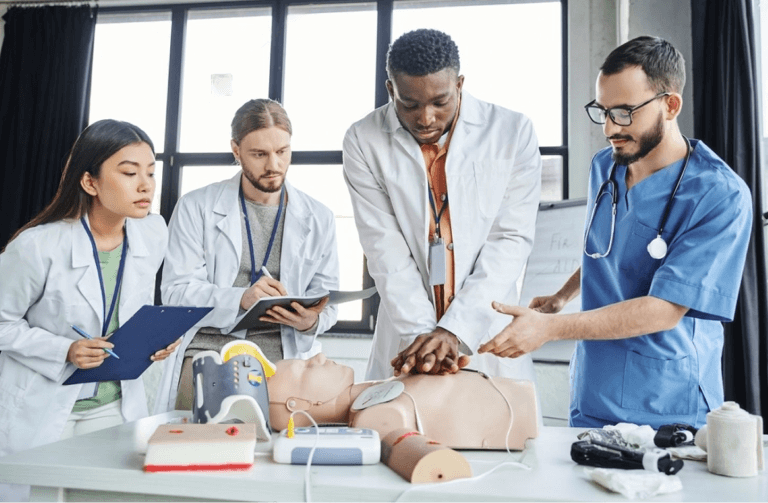
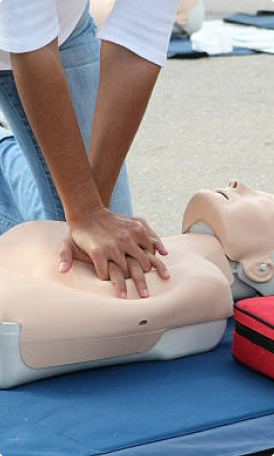
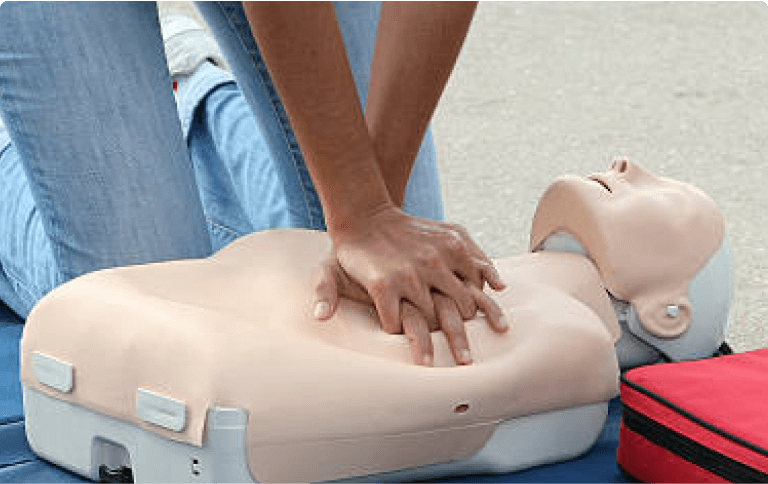
A healthcare provider CPR certification is a specialized training program tailored to their needs. Here you can master essential lifesaving skills like chest compressions, rescue breathing, and automated external defibrillator (AED) usage.
CPR is crucial for healthcare providers as it helps them provide prompt care to critical patients.

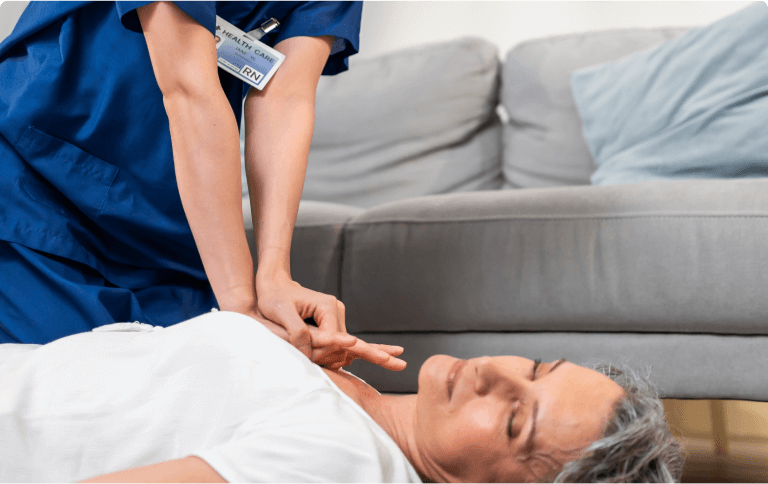
A recognized CPR certification imparts knowledge and skill to every healthcare provider, ensuring effective action during emergencies. Some of its benefits also include:

1. What to expect in the online CPR certification for healthcare providers?
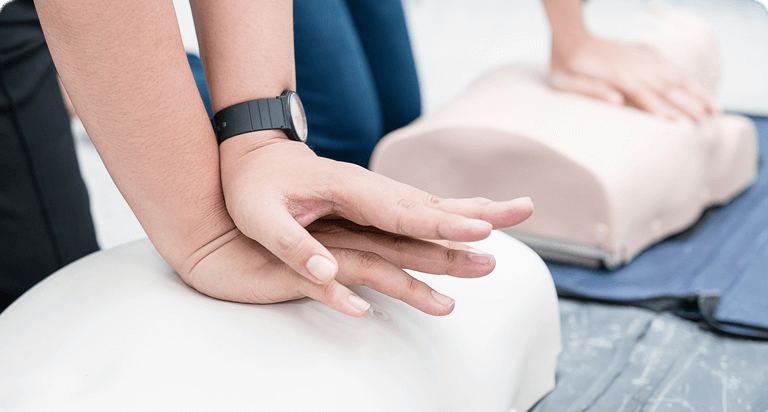
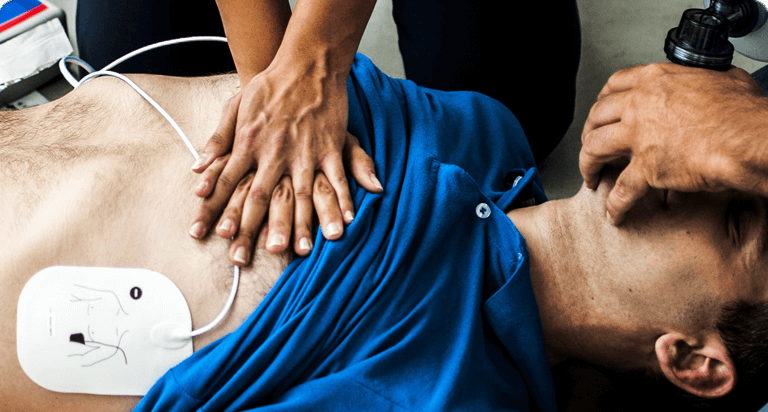
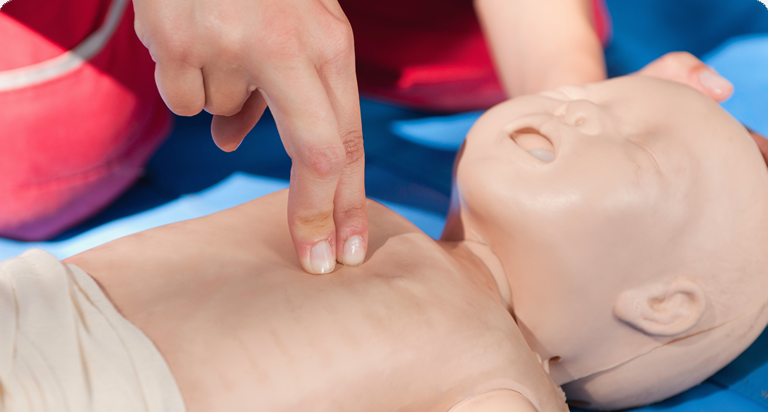
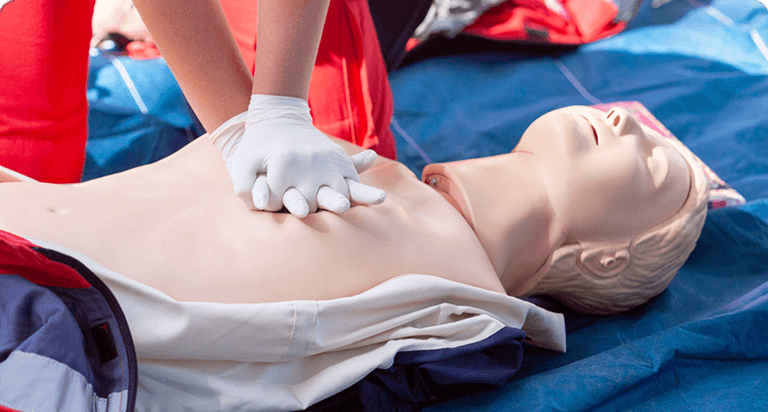
Our healthcare provider CPR certification course covers the full skill set clinical and patient-facing roles require: adult, child, and infant CPR, correct compression-to-breath ratios for each age group, bag-mask ventilation for one and two rescuers, and AED operation. The training is built around real clinical and prehospital scenarios rather than generic lay-responder content, so the skills map directly to what you will encounter on the job. Beyond the technical training itself, certification serves as documented proof of competency that satisfies employer credentialing requirements, supports regulatory compliance, and demonstrates to patients and supervisors that your emergency-response training meets current professional standards.
2. Who should take this course?
This course is built for healthcare professionals and other patient-facing or emergency-adjacent roles who need a documented, clinically oriented CPR credential rather than a general lay-responder certificate. That includes registered nurses, licensed practical nurses, certified nursing assistants, EMTs, paramedics, respiratory therapists, dental hygienists, physical therapists, and healthcare students completing clinical placements. Childcare center directors, fitness professionals, and workplace safety coordinators who need a healthcare-level credential also benefit. If your role places you in a patient-facing, high-acuity, or emergency-adjacent environment, this certification demonstrates that your training meets the standard those settings expect.
3. Are healthcare providers required to take CPR recertification?
Yes. Healthcare providers are generally expected to maintain current CPR certification throughout their career, which means completing recertification every two years rather than certifying once. This requirement exists because resuscitation guidelines are periodically updated by the American Heart Association and the Emergency Cardiovascular Care committee as new evidence-based research becomes available, and employers rely on recertification to confirm staff are working from the current standard rather than outdated technique. Most hospital systems, clinical placements, and licensing boards treat an expired certification as equivalent to no certification at all, so timely recertification is typically a condition of continued patient-facing work rather than an optional refresher.
4. Why should healthcare providers learn to use an AED?
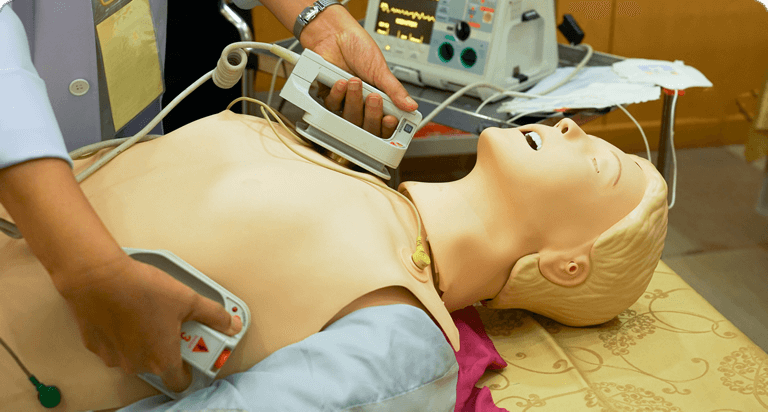
Cardiac arrest survival drops by roughly 10 percent for every minute that passes without CPR and defibrillation, and average emergency response times of 8 to 12 minutes mean a trained healthcare provider is frequently the only person positioned to close that gap. An automated external defibrillator is currently the only intervention capable of restoring a normal heart rhythm during cardiac arrest, which makes AED proficiency a core clinical competency rather than an optional add-on for anyone in a patient-facing role. Our course treats AED training as a required component, covering safe and correct use across adult, child, and infant emergencies, so certified providers can act immediately rather than waiting for a defibrillator-trained colleague to arrive.
5. What is the difference between CPR HCP and general CPR?
Healthcare Provider CPR and general lay-responder CPR share the same core techniques but differ meaningfully in depth and clinical context. HCP-level training adds advanced skills tailored to professional settings, including bag-mask ventilation for one and two rescuers, team-based resuscitation coordination, and integration with medical equipment commonly used in clinical environments. It also emphasizes recognizing and responding to cardiac emergencies specifically within healthcare settings rather than general public spaces. If your employer or licensing board specifies “healthcare provider” or “HCP” certification rather than standard CPR, this course is built to satisfy that requirement directly, since general lay-responder certification does not typically cover the clinical-specific skills these roles require.
6. Are CPR HCP and BLS the same?
They are related but not identical, and the distinction matters for meeting the correct employer or licensing requirement. Healthcare Provider CPR, the certification on this page, is a more advanced level of CPR training built specifically for medical professionals, covering clinical-context skills like bag-mask ventilation and equipment integration. BLS, or Basic Life Support, is a broader credential that includes CPR as one component alongside additional skills such as advanced airway management and coordinated multi-rescuer resuscitation protocols. If your role specifically requires “BLS” rather than “CPR for healthcare providers,” our dedicated BLS Certification course is the better fit, since it covers that wider scope directly rather than assuming CPR alone satisfies the requirement.
7. Is my certification accepted in all US states?
Yes, our Healthcare Provider CPR certification is nationally accepted and carries a 98 percent acceptance rate among employers, licensing boards, and clinical programs across the United States. Good Samaritan laws in most states also offer legal protection to individuals acting in good faith during an emergency while holding a recognized CPR certification. That said, a small number of hospital systems, nursing programs, or state-specific licensing boards may require an AHA-issued card specifically rather than a guideline-aligned equivalent, so it is worth confirming your employer’s exact requirement before enrolling if you are unsure which type of certification your role calls for.
Healthcare Provider CPR and BLS (Basic Life Support) are often used interchangeably, but they represent different scopes of training, and employers and licensing boards do not always accept one in place of the other. Healthcare Provider CPR certification, the course on this page, focuses specifically on adult, child, and infant CPR, AED use, and choking response tailored to clinical and patient-facing environments, including bag-mask ventilation technique for one and two rescuers.
BLS is a broader credential that includes CPR as one component alongside additional skills such as team-based resuscitation, advanced airway management, and coordinated multi-rescuer response protocols designed for in-hospital and prehospital settings. If your employer or licensing board specifies “BLS” rather than “CPR for healthcare providers,” our dedicated BLS Certification course covers that broader scope directly. If you are unsure which your role requires, confirm with your employer or program before enrolling, since the two credentials are evaluated differently even though the underlying skills overlap significantly.
American CPR Care Association is an independent online training provider. Our healthcare provider CPR certification curriculum is developed in accordance with the guidelines published by the American Heart Association (AHA) and the Emergency Cardiovascular Care (ECC) committee, the bodies that set the science-based resuscitation standards used across the United States. To be direct about the distinction: American CPR Care Association is not the American Heart Association, and our certifications are not AHA-issued cards.
For the large majority of workplace, clinical support, and licensing requirements, an American CPR Care Association Healthcare Provider CPR certification meets the stated standard and carries a 98 percent national acceptance rate. That said, some hospital systems, nursing programs, and specific state licensing boards require an AHA-issued card specifically rather than a guideline-aligned equivalent. If your employer or program has not clarified which they require, confirm before enrolling. For the majority of healthcare-adjacent, allied health, and clinical support roles, our certification provides the documented competency your position calls for.
Healthcare Provider CPR certification through American CPR Care Association is valid for two years. As your renewal date approaches, a focused online recertification course reviews any updated guidelines and re-confirms your competency, and it is typically faster to complete than the original certification since it does not repeat the full curriculum from the start.
Staying current matters beyond simple compliance: hospital systems, clinical placements, and licensing boards frequently treat an expired certification as equivalent to having none at all, which can affect scheduling, credentialing, and eligibility for patient-facing shifts. Visit our CPR renewal and recertification page to check current pricing and begin your renewal before your two-year window closes.
Jumpstart your career with an OSHA certified CPR online certification

Get a free BLS course with a PALS and ACLS certification
Learn More
Our nationally accepted certification follows the latest ECC guidelines and standards.
Learn More
Enroll in a comprehensive, nationally recognized healthcare course focusing on the needs of healthcare professionals
Learn More
Gain CE credit hours with every course at ACCA.
Learn MoreOur standards align with the 2020 ECC Guidelines and the National Emergency Response Organization. If the course certification gets rejected, we will issue a refund.

Shopper Approved collects trusted reviews from customers who have made a verified purchase.
“I’m not a people’s person and don’t like to go in a large group setting for my CPR certification. When I get nervous I tend to miss questions. I really like that this site allows for me to complete the course at my own pace, from a place of comfort. In this way, I can concentrate and truly grasp the CPR course concepts. Highly recommended!”
“This program was easy to understand and well put together. We certified a group of 10 friends, and appreciated the group setup.”
The CPR training was exceptional! I prefer this to the classroom setting. I am a certified Montessori teacher and this course worked out for me and my coworkers!