





Understanding First Aid: Essential Skills for Everyone to Learn
Aug 06, 2026

Last Updated On: February 10, 2026
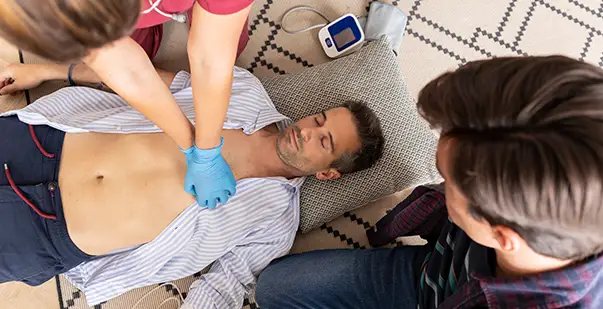
During a football game in Cincinnati on January 2, 2023, Buffalo Bills safety Damar Hamlin made a normal tackle on Bengals receiver Tee Higgins. A few moments later, the unthinkable happened. Hamlin got up, walked two steps, and fell down. He had a heart attack right there on the field.
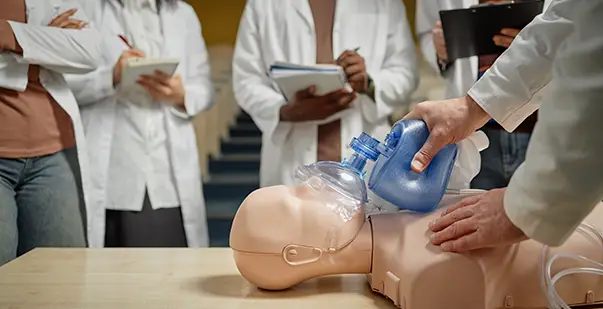
His training staff rushed in and started cardiopulmonary resuscitation (CPR). He used a bag valve mask to administer rescue breaths. This simple but powerful tool lets him give life-saving air without having to touch his mouth directly. The barrier made the process safer for both Hamlin and the rescuer while still allowing for good ventilation. But how does a mouth to mask device work? Read on to learn why they’re important and how they can save lives in an emergency.
A mouth to mask device is life-saving equipment that allows you to give breaths to someone who is not breathing well or at all without doing direct mouth-to-mouth. It fits over the person’s mouth and nose to create a seal so air can reach them safely and effectively.
Common types of these rescue breathing tools include:
A small foldable mask that is easy to carry. First responders often keep one on hand. It has a one-way valve and sometimes an oxygen inlet for extra oxygen if needed.
Similar to a pocket mask, but sometimes larger or made for specific situations. Some versions include extra features like filters. The one-way valve is the key safety feature; it lets air travel from rescuer to patient but stops any exhaled air, saliva, or fluids from coming back. This protects the rescuer from germs and makes the process cleaner and safer.
The National Center for Biotechnology Information says that bag valve mask ventilation is often done by one provider. However, using two providers is better with one person keeping the mask sealed and the other squeezing the bag. This CPR protection device makes rescue breathing safer, cleaner, and more useful. Here are some additional benefits of this device:
The built-in one-way valve stops exhaled air, saliva, and body fluids from getting to the rescuer. This helps stop the transmission of infections and diseases.
These masks can provide breaths as effectively or even more effectively than mouth-to-mouth, especially for people without advanced training. The design lets you use both hands to keep the airway open and create a solid mask seal.
The physical barrier gives rescuers peace of mind, making them more likely to give rescue breaths quickly and confidently, critical for good CPR results.
Pocket masks can be set up fast and work with common airway techniques like the head tilt and chin lift. This means even one rescuer can give effective breaths.
You can use a mouth-to-mask device for rescue breathing alone or during full CPR with chest compressions. It is a versatile and dependable tool.
When every second matters, knowing how to use a mouth shield CPR device can help save a life. Whether you have professional training or learned CPR in school, this device makes rescue breaths safer, cleaner, and more effective. Here is a simple guide to follow in an emergency:
| Do | Don’t |
| Check scene safety before starting | Skip scene safety check |
| Call EMS immediately | Delay calling for help |
| Ensure the mask covers both the nose and mouth | Place the mask loosely or off-center |
| Watch for chest rise after each breath | Overinflate lungs with forceful breaths |
| Follow CPR ratios (30:2 or 15:2 with 2 rescuers) | Use random or inconsistent timing |
Mouth-to-mask devices are lifesaving tools in emergencies when someone isn’t breathing or breathing poorly. They let you give mouth shield CPR safely by creating a barrier between you and the victim.
Mouth-to-mask devices all serve the same purpose, making rescue breathing safer and more effective, but they come in different designs. Knowing the types can help rescuers pick the right one for the situation.
This is the most common type you will see in first aid CPR kits. It is foldable, easy to store, and best for public/rescuer use. It has a one-way valve to keep air moving in the right direction, toward the patient, not back toward you. It’s reliable, works well for both trained bystanders and professionals, and costs about $15–$40.
Even more compact than a standard pocket mask, this one is built for quick deployment. Just unfold, place on the victim, and you’re ready to give breaths. It’s budget-friendly too, making it ideal for stocking in multiple locations.
This is the high-performance variant that emergency medical teams commonly employ. It contains an oxygen inlet so you can give extra oxygen along with rescue breaths. This is extremely helpful in very bad situations. It is still portable, but it is a little bigger and costs between $30 to $70.
No matter the type, all mouth-to-mask devices have a one-way valve to protect the rescuer from backflow, keeping rescue breathing both safe and effective.
Emergencies don’t wait for the “right” moment; they happen fast and without warning. Whether it’s a cardiac arrest, drowning, or any situation where breathing has stopped, a mouth to mask device can turn hesitation into action and fear into confidence. By providing a safe, hygienic, and effective way to deliver rescue breaths, this simple tool can literally save lives.
If you’re trained, you already know the difference quick action makes. If you’re not, the good news is you can learn.
Don’t just read about lifesaving, equip yourself with the skills to do it. Take our CPR Course and learn exactly how to use a mouth to mask devices and perform effective rescue breaths.
Read More
Subscribe
Search Here
Select Courses
Recent Posts
Categories