





Low-Cost Mechatronic Devices for Assisted CPR: Emerging Prototypes
Sep 15, 2026

Last Updated On: August 4, 2026
Cardiopulmonary resuscitation (CPR) is a life-saving technique that has saved countless lives around the world. But when was it first invented? The roots of CPR date back to the 18th century when physicians first realized the importance of restoring blood flow and oxygen to the body after a person’s heart or breathing stopped.
However, the modern practice of CPR as we know it today took shape in the mid-20th century. In 1960, Dr. Peter Safar and Dr. James Elam revolutionized resuscitation practices by combining mouth-to-mouth breathing with chest compressions, a combination that proved to be more effective in reviving patients. Since then, CPR techniques have continuously evolved, saving millions of lives across the globe. In this blog, we will explore the fascinating history of CPR, its development, and why it remains a critical skill for everyone to learn.
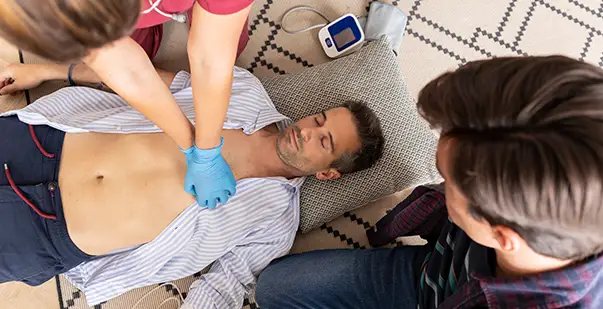
CPR involves a combination of chest compressions and artificial ventilation (rescue breathing) to manually maintain circulation and oxygenation to the brain and heart when a person’s heart stops beating or their breathing stops. When someone is experiencing cardiac arrest, drowning, choking, or another medical emergency that impairs their ability to breathe, CPR can keep them alive long enough for medical professionals to take over.
But despite its life-saving potential, research indicates that less than 40% of people in the U.S. who experience cardiac arrest outside a hospital receive immediate bystander CPR. This statistic shows that there’s still a gap in awareness and readiness and why learning it could empower you to handle a life-and-death situation.
The origin of CPR dates back to ancient civilizations. While modern CPR techniques were not developed until the 20th century, various cultures throughout history attempted methods to revive individuals who had stopped breathing or lost consciousness.
Records suggest that as early as 3000 BCE, healers in ancient Egypt used a form of chest compressions to revive the dead. Similarly, Greek physicians, including Hippocrates, believed in methods like artificial respiration using bellows to force air into the lungs.
During the Middle Ages, knowledge of resuscitation techniques was limited. However, by the Renaissance period (15th-16th century), medical practitioners in Europe began experimenting with techniques such as bellow ventilation and mouth-to-mouth resuscitation.
Before CPR was formally invented, people used a variety of methods to try to save those who had stopped breathing or whose hearts had ceased beating. Some of these techniques were based on folklore or rudimentary understandings of the human body.
The CPR development timeline truly began to take shape in the 18th century with more structured and documented efforts to revive individuals in distress.
The first documented case of mouth-to-mouth resuscitation was in 1732 when Scottish surgeon William Tossach successfully revived a suffocated coal miner by breathing into his mouth.
In Amsterdam, the Society for the Recovery of Drowned Persons was established to promote life-saving techniques for drowning victims. This society laid the groundwork for what would later become standardized CPR practices.
Throughout the 19th century, physicians experimented with external chest compressions. Dr. Friedrich Maass of Germany was one of the first to advocate for external cardiac massage in 1891, marking a significant milestone in the evolution of CPR.
The development of CPR was a gradual process of experimentation, refinement, and adoption of new scientific principles. Several key milestones marked the progress toward the CPR we use today.
In 1903, a pivotal moment in the history of CPR occurred when a method known as “closed-chest compression” was introduced. This was the precursor to chest compressions and was initially used in cases of drowning or electrical shock. However, this technique was still underutilized and largely experimental.
Then, in the 1950s, doctors began focusing more on the heart and its relationship to respiratory failure. In 1956, the American medical community was introduced to “external cardiac massage” by Dr. Paul Zoll, a cardiologist who demonstrated how chest compressions could stimulate the heart. His work helped establish the foundation for the CPR milestones we practice today.
The landmark event for CPR came in the early 1960s with the development of mouth-to-mouth resuscitation, pioneered by Dr. Peter Safar and Dr. James Elam. Safar and Elam’s work helped standardize mouth-to-mouth resuscitation as part of a two-step approach to revival: chest compressions and artificial ventilation. Their discoveries ultimately led to the birth of modern-day CPR.
In 1966, the CPR guidelines from the medical community evolved as further research and data collection on CPR’s effectiveness grew. By the 1970s, CPR training had become more accessible to the general public, spreading the practice beyond just medical professionals.
You may wonder, “Who invented CPR?” The truth is, no single person can be credited with its invention. Instead, the evolution of CPR is the result of a collective effort by numerous researchers, physicians, and pioneers over decades.
1950s: Development of Mouth-to-Mouth Resuscitation
In 1956, Dr. James Elam and Dr. Peter Safar demonstrated the effectiveness of mouth-to-mouth resuscitation in restoring breathing. Their research led to its acceptance as a key component of CPR.
1960: Official Recognition of CPR as a Life-Saving Technique
The modern concept of CPR was officially introduced in 1960 by Dr. William Kouwenhoven, Dr. James Jude, and Dr. Guy Knickerbocker. They combined mouth-to-mouth resuscitation with external chest compressions, creating the foundation for today’s CPR techniques.
The CPR milestones over the decades have helped refine the technique and improve survival rates in cardiac arrest cases. Some of the most notable moments include:
Since its founding in 1924, the AHA has been at the forefront of cardiovascular research, and its efforts in standardizing CPR techniques have been crucial to improving survival rates from cardiac arrest.
In the 1960s, when CPR was first standardized, the AHA took a leading role in promoting and disseminating these techniques. They published the first official guidelines for CPR in 1966, which helped establish uniformity in its application.
Since then, the AHA has continued to evolve CPR protocols based on the latest scientific evidence, ensuring that CPR remains effective in saving lives. The AHA has also worked tirelessly to spread awareness and encourage CPR training across the United States and internationally. Through their programs, millions of people have been trained in CPR, which has contributed to the rising survival rates from cardiac arrest. In addition, the AHA’s work with AEDs has made these devices more accessible to the public, further enhancing the impact of CPR.
Modern CPR has evolved into a faster, more effective life-saving technique driven by clinical research and global standards. The American Heart Association (AHA) now emphasizes hands-only CPR for untrained bystanders. This method is focused entirely on chest compressions without mouth-to-mouth breaths.
Hands-only CPR is easy to learn and highly effective. It helps maintain blood flow to the brain and heart until emergency medical services arrive. Research shows that hands-only CPR can triple the chance of survival after sudden cardiac arrest when started immediately.
Another key update is the CAB sequence: Compressions, Airway, and Breathing, which replaced the older ABC order to prioritize chest compressions. For healthcare professionals or trained responders, the AHA still recommends conventional CPR—30 chest compressions followed by 2 rescue breaths.
Key Highlights (2025 AHA Update):
What if your smartwatch could detect a cardiac arrest before anyone else? Could a robot one day deliver perfect chest compressions while help is on the way? These are no longer just futuristic ideas. They are fast becoming a reality. The field of CPR innovation is transforming rapidly, driven by advancements in artificial intelligence, wearable tech, and automation. Here’s a closer look at how these groundbreaking developments are reshaping the future of resuscitation:
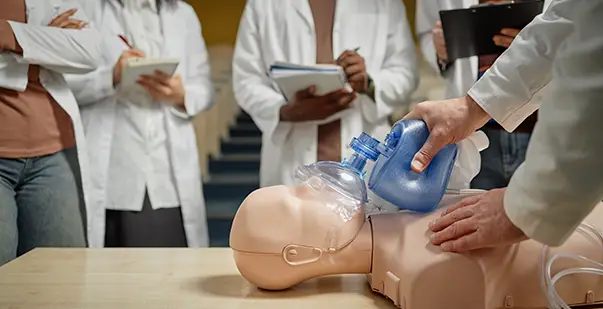
Traditional CPR training cost are evolving. With artificial intelligence, learners now receive real-time, personalized feedback during training. AI-driven manikins and mobile platforms analyze compression depth, rate, hand position, and even fatigue levels.
Can your watch save your life? The answer might soon be yes. New-generation wearable devices are being designed to detect early signs of cardiac arrest, such as abrupt changes in heart rhythm or blood flow patterns.
Smartwatches with built-in ECG sensors, like those from Apple and Fitbit, already alert users to irregular heart rhythms like atrial fibrillation. Research teams are now working on systems that can detect a cardiac arrest in real time and automatically alert emergency services or nearby responders.
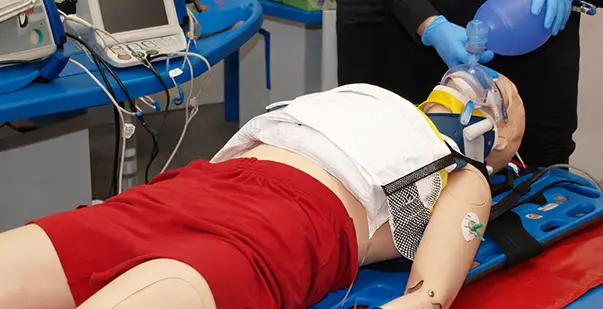
Innovations like mechanical chest compression systems (e.g., LUCAS and AutoPulse) are already used in ambulances and ERs to deliver consistent, effective compressions. However, researchers are now pushing further. Future robotic systems are being developed with adaptive algorithms to adjust compression patterns based on patient response, body type, or injury. These devices could operate in disaster zones, on the battlefield, or in remote locations where human responders are delayed.
Let’s recall, when was CPR invented? It was developed in 1960 by Drs. James Jude, Guy Knickerbocker, and William Kouwenhoven combined chest compressions with mouth-to-mouth ventilation to create a life-saving technique that has since saved millions. Since then, CPR has evolved with medical advancements, including the introduction of automated external defibrillators (AEDs) and digital training tools.
Today, you don’t need to be a medical professional to save a life. With CPR training now widely available online, learning this vital skill is easier than ever. As innovations continue to shape the future of emergency care, staying up to date is not just important, it’s a necessity. To stay ahead, enroll in a trusted CPR recertification online course today and be ready to act when every second counts.
Read More:
Get CPR Certified Today
Learn essential life-saving skills with our certified CPR course
Subscribe
Search Here
Select Courses
Recent Posts
Categories