




Public Confidence in Performing CPR Rises — Survey Insights & What That Implies
Apr 14, 2026
Last Updated On: February 9, 2026
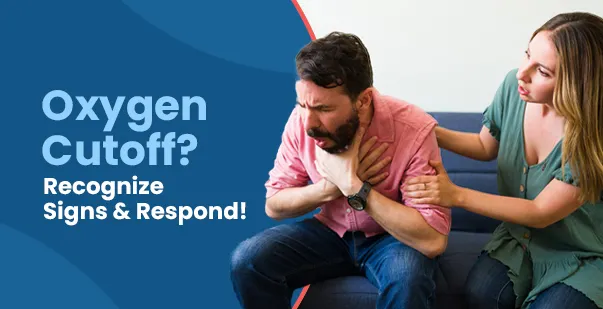
Every breath you take delivers life-sustaining oxygen to your cells. But what happens when that precious flow is interrupted? Asphyxiation is a clinical term that might sound new until you witness someone struggling for air or find yourself gasping in an emergency.
The truth is that oxygen deprivation can strike in everyday scenarios: a child choking on food, carbon monoxide seeping from a faulty heater, or someone experiencing a severe allergic reaction. These situations transform ordinary moments into life-or-death emergencies in seconds. In 2020, the National Safety Council reported that 1,430 Americans aged 74 and older died from choking, accounting for nearly half of all choking-related deaths that year. To save lives, you should be able to recognize the warning signs of oxygen deprivation. So, read on to learn the causes, symptoms, first aid steps, and prevention methods for asphyxiation.
Asphyxiation occurs when the body cannot get enough oxygen, leading to life-threatening consequences. Oxygen is essential for brain and organ function. When the oxygen supply is cut off, cells begin to die within minutes. The brain is highly sensitive to oxygen loss, damage can start within four minutes, and prolonged deprivation can cause permanent injury or death.
Asphyxiation can happen in several ways. Physical blockages, like food or objects in the throat, prevent air from reaching the lungs. Drowning fills the airways with water, stopping oxygen exchange. Chemicals like carbon monoxide replace oxygen in the blood, preventing vital organs from getting enough supply. Other causes include smoke inhalation, strangulation, or medical conditions like severe asthma.
Every day, thousands of people experience oxygen deprivation emergencies, from a toddler choking on a grape to an elderly person affected by carbon monoxide. Thus, being aware of what causes asphyxiation and who is most vulnerable to it could save a life. Below are the common causes of asphyxiation:
Choking happens when food or an object blocks the airway, stopping oxygen from reaching the lungs. It is common in young children and older adults due to difficulty chewing or swallowing. Hard foods, large bites, or small objects like toys can become lodged in the throat. Without quick action, choking can lead to asphyxiation.
Drowning occurs when water fills the lungs, preventing oxygen from reaching the bloodstream. The body cannot absorb oxygen from water, leading to suffocation. It can happen in pools, lakes, or even small amounts of water like bathtubs. Brain damage can begin within minutes due to oxygen deprivation, making immediate rescue and cardiopulmonary resuscitation (CPR) critical for survival.
Strangulation happens when external pressure on the neck blocks airflow, reducing oxygen supply to the brain. This can be caused by hanging, tight clothing, or forceful pressure. Suffocation occurs when breathing is blocked by an object or lack of air in a confined space. Both can cause unconsciousness within minutes and are life-threatening without quick intervention.
Smoke inhalation occurs when toxic gases and particles from fire enter the lungs, replacing oxygen. Smoke contains carbon monoxide and other chemicals that interfere with oxygen transport in the blood. Inhaled particles can also cause airway inflammation and swelling, leading to breathing difficulties. Prolonged exposure can result in unconsciousness, severe lung damage, and even death.
Carbon monoxide (CO) is a colorless, odorless gas that binds to hemoglobin in red blood cells, reducing oxygen transport. Exposure can occur from car exhaust, faulty heaters, or gas leaks. Low oxygen levels in the body can cause dizziness, confusion, and unconsciousness. Without immediate oxygen therapy, prolonged CO exposure can result in fatal asphyxiation.
Asthma and allergic reactions can cause airway narrowing due to inflammation or swelling. Asthma attacks trigger muscle constriction in the airways, making breathing difficult. Severe allergic reactions (anaphylaxis) cause throat swelling, blocking airflow completely. Without prompt treatment, such as inhalers or epinephrine, oxygen deprivation can lead to respiratory arrest and life-threatening asphyxiation.
Certain drugs, especially opioids and sedatives, slow down brain activity that controls breathing. High doses can cause respiratory depression, where breathing becomes too slow or stops entirely. Without enough oxygen, brain function declines, leading to unconsciousness and organ failure. Naloxone (Narcan) can reverse opioid overdose effects, but emergency medical care is needed to prevent death.
The common risk factors that increase the likelihood of asphyxiation are as follows:
Your body speaks its own language when starved of oxygen. The signs of oxygen deprivation can emerge within seconds or develop gradually over hours, making recognition important for survival. What makes this condition particularly dangerous is how quickly it can progress from mild discomfort to life-threatening emergency, often before the victim fully realizes what’s happening. Watch for these warning signs:
If someone is choking, they need immediate help to clear their airway. If the person is still able to cough or speak, their airway is only partially blocked. Encourage them to keep coughing forcefully, as this can help push the object out on its own.
Stay close and monitor them in case their condition worsens. In case the condition worsens, you need to perform the Heimlich maneuver. Below are the common first-aid steps to take during an asphyxiation emergency:
If the person cannot cough, talk, or breathe, then the airway obstruction is severe. You should act immediately and perform the Heimlich maneuver:
If the obstruction is not cleared after these attempts, call emergency services (e.g., 911) immediately. Continue alternating between back blows and abdominal thrusts until the object is dislodged or help arrives.
If the choking person becomes unconscious, lower them to the ground and begin CPR if trained. Always check the mouth for any visible obstruction before attempting rescue breaths. It is essential to avoid finger-sweeping unless you can see the object, as this may push it further down the airway.
If a person is not breathing, CPR can help keep oxygen flowing to the brain and other vital organs. Follow these steps for adults, children, and infants. The CPR techniques for a non-breathing victim are:
Shake the person’s shoulder gently and ask loudly, “Are you okay?” If they do not respond, check if they are breathing by looking for chest movement and listening for breaths. If there is no breathing or only gasping, begin CPR immediately.
If the person is unresponsive, call 911 right away or ask someone nearby to call. If you are alone and dealing with an infant or child, give CPR for two minutes before calling for help to ensure they receive immediate oxygen support.
Place both hands in the center of the chest and push hard and fast (100-120 compressions per minute). Press down about 2 inches for children and at least 2 inches for adults. For infants, you should use two fingers in the center of the chest and press about 1.5 inches deep. Perform 30 compressions quickly.
Tilt the head back slightly, pinch the nose (for adults and children), and breathe into their mouth. For infants, cover both their nose and mouth with your mouth. Give two breaths after every 30 compressions.
Keep doing compressions and breaths until the person starts breathing on their own or emergency responders take over. If available, use an automated external defibrillator (AED) as soon as possible.
Asphyxiation emergencies can strike suddenly, but most are preventable with awareness and simple precautions. From childproofing your home to installing detectors, these practical steps can protect you and your loved ones from the silent threat of oxygen deprivation. Some of these measures to prevent asphyxiation in different scenarios are discussed as follows:
To reduce choking risks, cut food into small pieces for young children and avoid giving them hard candies, nuts, or whole grapes. Teach kids to chew food properly before swallowing. Supervise mealtime, especially for toddlers and elderly individuals with swallowing difficulties.
Keep plastic bags, balloons, and small objects away from young children. For infants, use a firm mattress and avoid placing pillows, blankets, or stuffed animals in the crib. Ensure sleeping areas are safe and free of anything that could block breathing.
Never leave children unattended near water, including bathtubs, pools, and lakes. Teach kids how to swim and always use life jackets in deep water. Learning CPR can help save lives in case of a drowning emergency, so consider taking a CPR course.
Install carbon monoxide detectors in your home and check them regularly. Never run a car engine in a closed garage, and ensure proper ventilation when using gas appliances. Schedule routine maintenance for furnaces, stoves, and heaters to prevent dangerous carbon monoxide buildup.
Store medications safely and out of reach of children. Be aware of opioid risks and only take prescribed doses. If opioids are used in your household, keep Narcan (naloxone) available, as it can quickly reverse an overdose and save a life.
The moment when someone starts breathing again after choking or being rescued from water brings immense relief, but the danger may not be over. Even when someone appears to recover completely, invisible damage could be developing beneath the surface. Knowing when to head to the emergency room after a breathing incident could prevent lasting harm or even save a life. Seek immediate medical attention if:
Asphyxiation is a serious emergency that can happen in many ways. It can occur due to choking, drowning, smoke inhalation, and sometimes even due to drug overdose. You can act quickly when someone is struggling to breathe if you know what causes this breathing difficulty. Simple actions like the Heimlich maneuver, CPR, or removing an obstruction can save lives. After a breathing emergency, medical care is important to prevent hidden complications.
Preventive measures can be taken to reduce the risk of oxygen deprivation. However, emergencies can still happen, and being prepared is the best way to protect yourself and others. Enroll in a certified CPR course today and be ready to save a life whenever required.
Read More
Subscribe
Search Here
Select Courses
Recent Posts
Categories