






Extreme Sports First Aid: Injury Prevention and Response
Mar 12, 2026

Last Updated On: February 9, 2026
In 2025, online CPR courses will be more popular than ever, but one big question still lingers: Are they truly reliable? With packed schedules and the ease of learning from home, it’s no surprise that more people are choosing online options to get certified. But can a virtual classroom really prepare you to act confidently in a real emergency? Read on to find out how online CPR classes compare to conventional in-person classes, what kind of certification you’ll receive, and whether they meet the standards set by recognized emergency care organizations.
Online CPR classes allow people to learn CPR without attending a physical class. Many organizations offer online courses, but not all are legitimate. Some courses are fully online, while others combine online learning with hands-on practice. Moreover, it is important to understand how these courses work before enrolling.
Online CPR courses offer the flexibility to be accessed anytime. This allows learners to study whenever it suits them best, whether early in the morning, during lunch breaks, or late at night. This 24/7 availability is especially helpful for people with busy or unpredictable routines, which makes it easier to balance learning with work or family responsibilities.
There are two main types of online CPR certification: 100% online and blended courses. 100% online courses are great for those who need a certification for general knowledge, workplace requirements, or personal preparedness. They cover all the essential techniques through interactive lessons, videos, and quizzes, making learning convenient and self-paced.
Blended courses combine online learning with an in-person skills session, allowing you to apply what you’ve learned on a CPR mannequin under expert guidance. Many healthcare organizations and employers prefer this option since it reinforces practical skills.
CPR certification is not permanent. It typically remains valid for 1 to 2 years. This applies to both online and in-person modes of learning. After the certification period expires, individuals are required to take a refresher course or recertify to ensure their knowledge and skills stay up to date with the latest guidelines. Many online CPR class providers offer renewal courses for those who need to update their certification.
Are you not sure whether to take online CPR classes or go for in-person training? It all comes down to what works best for your lifestyle and learning style. If you need flexibility and want to learn at your own pace, online courses might be the way to go. But if you prefer hands-on practice with an instructor, in-person sessions could be a better fit. Here’s a quick breakdown of hands-on vs. online CPR to help you decide:
| Feature | Online CPR Training | In-Person CPR Training |
| Learning Format | Delivered through pre-recorded video lectures, digital reading materials, interactive quizzes, and sometimes simulations. | Taught in a classroom setting with an instructor guiding live demonstrations and hands-on practice. |
| Flexibility | Learners can study at their own pace, anytime, anywhere, using a computer, tablet, or smartphone. | Requires attending a scheduled class at a training center, limiting flexibility. |
| Cost | Generally more affordable, depending on the provider. No extra costs for travel or materials. | More expensive due to instructor fees, venue costs, and hands-on training resources. |
| Travel Requirement | No travel required; learners can complete the course from home or any location with internet access. | Requires commuting to a training center or facility, which can be inconvenient for those with busy schedules. |
| Time Commitment | Self-paced learning allows students to complete the course and virtual first aid training in a few hours or over several days, depending on their schedule. | Requires attending a structured class, usually lasting 4–8 hours, with a fixed start and end time. |
| Learning Materials | Includes video tutorials, step-by-step written guides, digital practice exams, and sometimes virtual simulations. | Includes live demonstrations, hands-on practice with CPR mannequins, printed training booklets, and instructor-led discussions. |
| Hands-on Practice | Some courses lack hands-on training, which is essential for mastering techniques like chest compressions and rescue breaths. | Provides real-time hands-on training with CPR mannequins, allowing learners to develop muscle memory and proper technique. |
| Instructor Feedback | No direct instructor supervision; learners rely on quizzes and course materials to evaluate their understanding. | Real-time instructor feedback ensures that learners perform CPR techniques correctly and make immediate improvements. |
| Skill Retention | Without hands-on practice, skills may not be as effectively retained. Learners may struggle to apply techniques in real-life emergencies. | Higher skill retention due to hands-on training, instructor guidance, and real-world practice scenarios. |
| Employer Acceptance | Some employers accept fully online CPR certification, but many, especially in healthcare, require in-person or blended training. | More widely recognized and accepted, particularly in medical, childcare, and emergency response professions. |
| Certification Validity | Certification is typically valid for 1–2 years, but fully online certifications may not meet specific job requirements. | Certification is usually valid for 1–2 years and is often preferred for workplace compliance. |
| Recertification Options | Many online CPR classes offer quick recertification programs for those renewing their CPR certification. Some employers do not accept fully online renewals. | Recertification often involves attending a refresher class with hands-on practice to ensure continued competency. |
| Best Suited | People looking for a quick certification, refresher training, or those in non-medical fields where hands-on skills are not required. | Professionals in healthcare, childcare, fitness training, and emergency response roles where hands-on CPR skills are essential. |
| Effectiveness | Good for learning CPR theory, steps, and guidelines, but may not fully prepare learners for real-life emergencies. | Provides comprehensive training with both theoretical and practical components, making it more effective for real-life applications. |
Yes, most online CPR Classes are accredited and widely recognized. Trusted organizations carefully review these courses to ensure they meet industry standards. They verify that the course content, techniques taught, and certification provided align with current best practices and safety protocols for effective CPR. Online certification providers follow the same guidelines as in-person courses, making them a reliable option for many learners. However, you must choose a recognized and trusted provider to ensure the best results.
If you’re taking CPR for work, it’s always a good idea to check with your employer first. Choosing an accredited CPR course provider ensures that your certification is both valid and valuable.
CPR Training Made for Everyone
Thinking about taking CPR select online, but unsure if it’s the best option? Online courses offer flexibility and convenience, but you might wonder if they provide the same level of hands-on experience as in-person training. To help you decide, here’s a breakdown of the main advantages of learning CPR online:
Complete training around your existing commitments without taking time off. Access course materials at 2 AM or during lunch breaks, which is perfect for busy professionals, parents, or students with irregular schedules.
Online CPR classes are 30–50% cheaper than traditional ones. There are no venue, travel, or printed material costs. These savings lower the course fee, which makes online CPR training more affordable for students, teams, and organizations.
Anyone with an internet connection can enrol and begin learning. You can begin training instantly after registration rather than waiting for the next scheduled in-person class. It is perfect for those needing certification quickly for job applications or employment requirements with tight deadlines.
Learners can move through the material at a comfortable pace. You can spend extra time on challenging concepts or move quickly through familiar content. You can even revisit important sections multiple times, ensuring better understanding.
Courses often include detailed video demonstrations, voice-over instructions, and quizzes. These resources guide learners step by step and provide instant feedback. This helps them correct mistakes and build confidence without feeling rushed by an instructor.
Online CPR certifications are widely accepted in non-clinical workplaces like offices, schools, gyms, and volunteer groups. As long as the course is from a recognized provider, employers often approve it for compliance and safety requirements.
Most online CPR certifications are valid for 1 to 2 years, similar to traditional in-person classes. This makes them a convenient and time-saving option for professionals needing quick renewals or compliance updates.
With many Online CPR Classes available, it is important to choose a legitimate one. Here are some factors to consider:
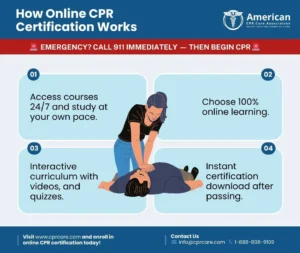
CPR certification price make learning life-saving skills more accessible than ever. They offer flexibility, allowing you to train at your own pace from anywhere. Many accredited online programs provide interactive lessons and simulations that effectively teach CPR techniques.
For those needing hands-on practice, blended courses combine online learning with an in-person skills session, ensuring you get both convenience and practical experience. If you’re taking CPR for work, it’s always a good idea to check employer requirements and choose a trusted, accredited provider. With the right course, online CPR certification can be a valuable and effective way to gain essential skills that could help save a life.
Subscribe
Search Here
Select Courses
Recent Posts
Categories