





Understanding First Aid: Essential Skills for Everyone to Learn
Aug 06, 2026
Last Updated On: February 20, 2026
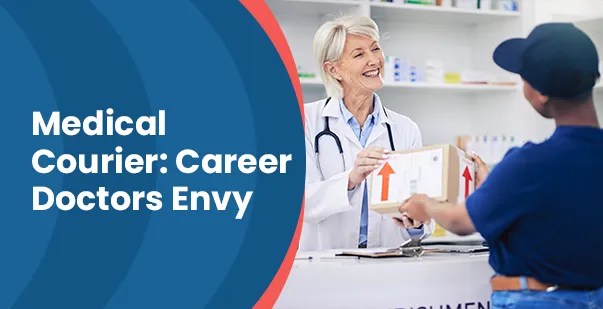
Hospitals, labs and medical clinics need medical couriers to transport materials like lab specimens, blood, medicine, and medical supplies. Even if patients never get to interact with them, medical couriers contribute directly to patient care. Through their jobs, medical couriers help ensure that medical professionals obtain the medical supplies, lab results, and medical records that they need, when they need them. In medicine, time and accuracy are important and this profession necessitates both.
Several individuals start out as medical couriers due to the flexible working hours or as a stepping stone in their career in the healthcare industry. But many still do not know what basic medical courier requirements are. As time progresses, however, they become aware of how valuable the job is and how much it impacts the overall healthcare system. So, keep reading to learn what the medical courier job involves and the requirements to get started.
A medical courier is responsible for picking up and delivering valuable medical supplies between hospitals, clinics, labs, pharmacies, and any other healthcare facilities. Their duty is to get those supplies quickly and in good condition.
Medical couriers collect and deliver items according to a set schedule or in response to urgent requests. They plan the safest and most efficient routes, keep detailed records of every pickup and drop-off, and strictly follow safety protocols—especially when handling sensitive or hazardous materials.
Their work can involve moving a variety of items, such as:
Quick deliveries help doctors and nurses give care on time, so patients can get their tests, treatments, and surgeries when they need them. Being accurate is just as important—taking the wrong item or going to the wrong place can cause serious problems.
To become a medical courier, you need certain skills and must follow the law. The exact rules can change depending on where you work.
Most employers require at least a high school diploma or equivalent. While no formal degree is typically needed, a diploma meets the basic entry standard.
The following are the medical courier requirements you must meet to work safely and legally:
Step 1: 🎓 High School Diploma or GED
(Basic education requirement)
Step 2: 🚗 Valid License & Clean Driving Record
(Trust & safety on the road)
Step 3: 🛡️ Get Certified Online
(HIPAA, Bloodborne Pathogens, OSHA safety)
Step 4: 💻 Build Experience in Healthcare Logistics
(Start with specimen, supplies, or document delivery)
Step 5: 💼 Grow Your Career
(Specialize in organs, pharma, or start your own service)
Getting certified as a medical courier can improve your job prospects and demonstrate your commitment to safety and compliance. Here is a clear process to earn your certification online.
You will be required to have a GED or a high school diploma to get started. A majority of employers would like you to have an operational car for deliveries, as couriers make deliveries via their own vehicle.
A valid driver’s license and safe driving history are non-negotiable. Couriers are trusted with critical deliveries, so safety and reliability on the road matter most.
Choosing a medical courier certification program online is the fastest way to stand out with employers and prove you’re trained in HIPAA compliance, BBP safety, and OSHA standards.
Start small with specimen, supply, or document delivery. This will help you learn the flow of logistics in healthcare while proving you can meet strict timelines.
Once you have gained experience, you can move into specialized areas like organ transport or pharmaceuticals. You can even launch your own courier service.
Medical couriers go through a standard set of procedures to guarantee that medical supplies reach their destination intact and according to schedule:
There is a growing demand for medical couriers. It is being driven further by the increasing need for quick delivery of medical lab samples and medical supplies. Between 2024 and 2028, the field is projected to expand at an average rate of about 5.8% per year. The rise of home healthcare and telemedicine will likely boost demand even more, creating more jobs and offering medical couriers strong, long-term career stability.
| Career Path | Example Role | Avg. Pay (U.S.)* | Growth Potential |
| Entry-Level | Medical Courier | $15 – $20/hr | Learn specimen handling & healthcare logistics |
| Specialized Transport | Organ/Pharma Courier | $20 – $28/hr | Requires permits, higher responsibility |
| Supervisory Roles | Logistics Coordinator / Lead Courier | $45k – $55k/yr | Manage routes & teams |
| Broader Healthcare Careers | Lab Tech, Pharmacy Tech | $35k – $50k/yr | Transition into clinical roles |
| Entrepreneurship | Courier Business Owner | Varies | Build your own medical logistics service |
Working as a medical courier can be the starting point for a lasting and rewarding career in healthcare logistics. With the right mix of experience, training, and opportunity, couriers can take on more advanced roles, move into management, or even launch their own delivery businesses.
Some couriers choose to focus on transporting highly sensitive or high-value medical items. Such items include organ transplants, prescription medications, or medical cannabis. These jobs usually need more training but they often pay more and come with more responsibility.
If you want to run your own business, one possibility is to create an independent courier service that focuses on delivering medical supplies. This option gives you greater control over your work hours, clientele, and the growth of your business.
Medical courier skills like attention to detail, knowledge of medical regulations, and experience dealing with healthcare professionals can be transferred to other jobs. Some couriers move to pharmacy technician, medical laboratory technician, or other health support jobs.
To get started as a medical courier, you must know the basic medical courier requirements. You’ll want a current driver’s license, a clean driving history, and safety rules training. With this preparation, you are now equipped to become a member of this rapidly expanding healthcare career. Through these prerequisites, you are ready to properly manage medical objects, adhere to rules, and perform accurately and professionally.
With your certification, you obtain stable employment, a flexible working schedule, and a chance to progress to specialization, managerial level, or even set up your own courier service.
Take your first step today. Sign up now for our HIPAA Training Course and learn skills that employers value.
Read More:
Subscribe
Search Here
Select Courses
Recent Posts
Categories