




Kitchen Safety: Preventing and Treating Burns and Cuts at Home
Mar 26, 2026

Last Updated On: February 9, 2026
Every October, Fire Prevention Week reminds you that a fire isn’t only about property damage, it’s about protecting lives. The campaign began in 1922 after the Great Chicago Fire, and it’s still the longest-running public safety effort in the U.S. Its purpose is simple: raise awareness, teach families, and make sure people know how to respond.
The numbers show why it matters. U.S. fire departments answer over 350,000 home fire calls every year. Many people don’t just suffer burns, they also struggle with smoke inhalation. In those first few minutes before paramedics arrive, what you do can shape the outcome.
This guide on Fire Prevention Week: First Aid & CPR Tips for Burn and Smoke Emergencies will walk you through practical steps so you stay ready. Awareness and preparation don’t stop accidents, but they do give you the power to act when it matters most.
When a fire breaks out, the damage isn’t limited to flames. The injuries you face can come just as much from smoke as from burns. To protect yourself and others, you need to know how fire affects the body and why smoke is often the deadlier threat.
Within minutes, a room can fill with toxic gases, thick smoke, and unbearable heat. In most cases, people don’t collapse because of burns. They collapse because oxygen levels drop while carbon monoxide rises. That’s why learning proper emergency response for fires is so important for victims to survive, as many are already unconscious when firefighters arrive, even if flames never touched them.
Burns strip away the skin layers that normally guard against infection and fluid loss. Severe burns can push the body into shock, making it hard for the circulatory system to keep blood flowing. Smoke is just as dangerous. Hot gases and chemicals scar the airways, cause swelling, and block breathing. If someone isn’t treated in the right order, airway first, then blood flow, then wound care, the body can shut down fast.
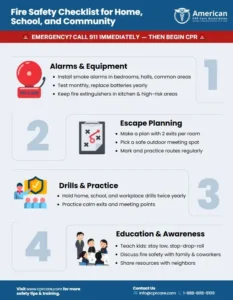
Fire Safety Checklist for Home, School, and Community
Most fire deaths aren’t from burns. They’re from smoke inhalation. Breathing in toxic gases cuts off oxygen and poisons the body at the same time. Just a few breaths can leave you confused, unconscious, or in cardiac arrest before the fire even spreads. That’s why smoke is often the true killer in a fire emergency.
When a burn happens, the first few minutes shape how bad it becomes. Quick care reduces pain, limits skin damage, and lowers the chance of infection. During Fire Prevention Week, it’s worth learning what to do, and what to avoid, so you can act with confidence.
A burn doesn’t stop hurting the moment contact ends. Heat keeps damaging deeper skin layers if you don’t step in fast. Cooling the area right away slows this process and protects against further harm. Early action also makes recovery smoother and, for severe cases, helps keep someone stable until doctors can treat them.
Disclaimer: This is general advice — severe burns require medical attention.
When to get medical help
Call for emergency care right away if:
Smoke inhalation is a major cause of death in fires. When you breathe in toxic gases or superheated air, it damages your airway, lowers oxygen levels in your blood, and can cause dangerous complications even after the fire is out. If you ever find yourself helping at the scene, here’s what you should know.
When smoke enters the lungs, several things happen:
Remember: even if skin burns look small, inhaling smoke can be far more dangerous.
At first, signs of smoke inhalation may be easy to miss, but they can get worse quickly. Watch for:
Mild / Early Signs
Serious / Emergency Signs
Your main goal is getting the person out of danger and treating smoke inhalation by keeping their airway open until professionals arrive.
In a fire, cardiac arrest usually happens because of smoke inhalation, blocked airways, or severe shock, not from the flames alone. When breathing or circulation stops, CPR keeps the person alive until professional help arrives. Here’s what you need to know and how to act quickly.
Adults & Children (over 1 year):
Infants (under 1 year):
Fire safety starts before an emergency ever happens. Preparation and awareness reduce harm when fires break out. If you and your community focus on prevention, you lower the chance of injuries and damage.
When people take fire safety seriously together, outcomes improve. Neighborhood campaigns, evacuation drills, and working smoke alarms make a direct difference. According to the National Fire Protection Association (NFPA), homes with smoke alarms cut the risk of death in a house fire by more than half. That’s a clear sign that small, practical steps save lives.
Fires move fast, and when they do, your preparation decides how you respond. If you know what to do in cases of burns, smoke inhalation, or cardiac arrest, you can act instead of freezing up.
That’s why Fire Prevention Week goes beyond awareness. It’s a reminder for you to check your safety habits at home and at work. Use this time to learn CPR, refresh your first aid skills, and make sure you’re ready if something happens.
If you haven’t already, sign up for CPR and first aid certification with a trusted provider. These courses don’t just teach techniques; they give you the confidence to step in and help when it truly counts.
Subscribe
Search Here
Select Courses
Recent Posts
Categories