






Digital Detox for Healthcare Workers: Managing Screen Time and Tech Burnout
Jan 19, 2026

Last Updated On: February 10, 2026
In a medical emergency, the first thing to do is make sure the person can breathe. This starts with making sure they have a clear or patent airway. A clear, open path for air to travel from the nose or mouth into the lungs. In medical terms, “patent” simply means “unobstructed.” Without this, no amount of Cardiopulmonary resuscitation (CPR), oxygen, or other treatment can save a life, because oxygen can’t reach the body’s vital organs.
Airway problems can develop in seconds, from choking to severe allergic reactions. Each year in the U.S., more than 5,000 people die from choking alone, which shows why airway checks are critical. For this reason, an EMT airway check is always the very first step in emergency response. It is a skill even bystanders trained in first aid are taught to perform before anything else. This guide will explain exactly what a patent airway is and what to do when it’s not clear.
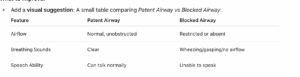
A patent airway is a clear breathing passage from the nose or mouth all the way to the lungs. If nothing is blocking it, air flows freely, allowing normal breathing.
Think of it like a straw:
The same goes for the airway. If it’s blocked by food, swelling, or even the tongue falling back when someone is unconscious, air can’t reach the lungs. This is called an obstructed airway, and it can become life-threatening in seconds.
When comparing a blocked vs patent airway, medical responders look for signs like chest movement, breath sounds, and the ability to speak. When the airway is open, the person can talk or cry, breathing sounds normal, and there are no signs of choking.
When it’s blocked, breathing may sound noisy or wheezy. The person might be gagging or gasping, unable to speak, or making no airflow despite trying to breathe.
The brain and heart rely on a constant supply of oxygen. Without it, cells start to die within minutes. That’s why, in both first aid and emergency medicine, protecting the airway is always the first priority. If oxygen can’t get in, no other treatment will work.
A 2025 PubMed study looked at cardiac arrest patients, including avalanche victims. CPR was started in 66% of cases, and 61% of those received tracheal intubation to keep the airway open. Even with these measures, only a small number survived to leave the hospital, showing how important good airway management is for survival.
Here’s why it’s so important:
A non-patent airway means the path for air to reach the lungs is blocked or narrowed. This is a life-threatening emergency that can happen suddenly or develop over time. Here are the most common causes of a blocked or non-patent airway:
Quick Action Tip: If you suspect a blocked airway, call 911 immediately and start basic first aid (e.g., Heimlich for choking or CPR if unresponsive).
In an emergency, airway assessment is one of the first and most important steps to help someone breathe. Different tools are used depending on how serious the problem is.
Two simple tools are the oropharyngeal airway (OPA) and the nasopharyngeal airway (NPA). The OPA is a curved piece of plastic that goes into the mouth to keep the tongue from blocking breathing. It’s used for unconscious patients who don’t have a gag reflex. The NPA is a soft tube that goes through the nose into the throat, and it can be used when the person is awake or semi-conscious. These are quick, temporary solutions, often used while moving a patient or before more advanced care.
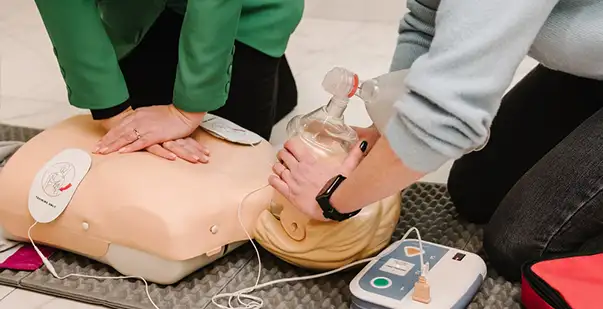
A bag valve mask is a hand-held device used when someone is not breathing well or not breathing at all. It has a mask that covers the nose and mouth and a bag that you squeeze to push air into the lungs. It can also be connected to extra oxygen.
When it comes to saving a life, nothing is more urgent than making sure the person has a patent airway. Without an open airway, oxygen cannot reach the lungs. This makes every second matter. Whether it’s using simple tools like an OPA, giving rescue breaths with a bag-valve mask, or performing advanced procedures, airway management is the foundation of emergency care.
Learn airway assessment and emergency care skills with our online First Aid Course. Flexible, certified, and designed for real-world emergencies.
Read More
Subscribe
Search Here
Select Courses
Recent Posts
New CPR & AED Laws in Schools Explained
Categories