





Extreme Sports First Aid: Injury Prevention and Response
Mar 12, 2026
Last Updated On: January 7, 2026
Head injuries happen at home, in sports, and on the road. Most concussions are mild, but you should know the warning signs, what first aid to give, and when to see a doctor, especially for children and athletes. Whether you are watching your child’s soccer game, hiking with friends, or simply going about your day, head injuries can occur without warning. While traumatic brain injury (TBI) is a significant public health concern in the United States, it’s important to understand that concussions represent the milder end of the TBI spectrum, and with proper recognition and care, most people recover fully.
However, knowing how to respond in those critical first minutes matters. Some concussions do require immediate medical attention. In fact, more than 586 Traumatic brain injury (TBI) related hospitalizations occur every single day in the United States. That’s why understanding proper first aid for a concussion is essential knowledge for parents, coaches, caregivers, and anyone who might witness a head injury. So what exactly should you do when someone sustains a concussion? Read on to find out.
Your brain floats inside cerebrospinal fluid, protected by your skull. A concussion is a mild traumatic brain injury (mTBI) caused by a blow to the head or a blow to the body that makes the head move rapidly. This movement can temporarily change how the brain works. Concussions are usually not life-threatening, but they must be taken seriously because symptoms can affect thinking, balance, mood, and sleep.
Symptoms of concussion are subtle and may not appear immediately after the incident. They can last days, weeks, and even longer. To seek immediate care, look out for the following symptoms:
If any of these symptoms appear or worsen, seek medical attention immediately. Even mild head injuries should be checked by a healthcare professional.
As their heads are large compared to their body, young children often fall victim to concussions. In fact, the Centers for Disease Control and Prevention (CDC) reports that about 7 out of 10 emergency department visits for sports- and recreation-related TBIs and concussions are among children ages 17 and under.
If you suspect a child has a concussion, monitor them for the first 24 hours. Don’t give any medications without consulting a professional, as it might cause bleeding. Young children may not be able to fully communicate what they are feeling. So, watch closely for any behaviour changes or signs. Some common symptoms include:
Head injuries can occur in various settings and for different reasons. When you can recognize the common causes, you can better prepare for potential hazards and take appropriate preventive measures in your daily activities. Let us take a look at them:
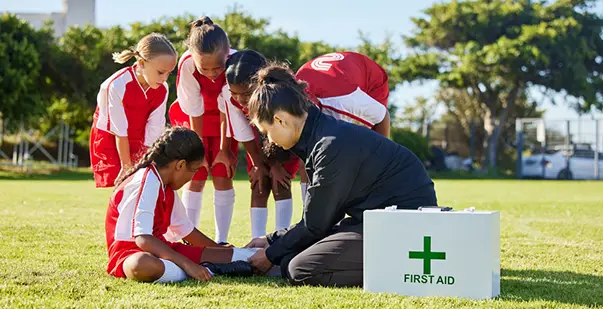
Sports and recreational activities can put your head at risk. For instance, Soccer heading causes repeated minor impacts, while basketball creates collision opportunities during rebounds. If you are a young athlete, stay aware of sports concussion protocol to protect yourself.
If you are in a car accident, your head can strike the steering wheel, window, or dashboard, or the sudden stop can cause your brain to bounce around inside your skull. It also includes accidents while you’re driving, walking across the street, or riding your motorcycle or bicycle.
Anyone can slip on a wet floor, trip over a toy, or miss a step going downstairs. Falls are actually the most common cause of head injuries. They can occur when you are climbing a ladder, walking down icy steps, or simply losing your balance. These everyday accidents can happen anywhere, from your own home to your workplace.
When you see any of the above symptoms in the victim or yourself after a head injury, you might need to act fast. Follow these first aid steps for a suspected concussion to ensure the safety and well-being:
Before approaching the injured person, ensure the surroundings are safe for both you and the victim. If the injury happens in a dangerous situation like a car accident, move the person only if it is required to get them out of the hazardous zone.
Use a loud voice and a shoulder tap only. Do not shake the head or neck. If they respond, keep them still and continue observing. If they don’t respond, move to airway and breathing. Here’s a brief overview of how to assess a concussion in a conscious and unconscious person.
| Conscious Person | Unconscious Person |
| Ask simple questions (name, date, location) | Check responsiveness (tap shoulders, call name) |
| Test memory (recent events) | Look for obvious injuries |
| Observe pupil response to light | Monitor breathing pattern |
| Check for nausea/vomiting | Check pulse if trained |
| Note any personality changes | Look for fluid from the ears/nose |
Follow the ABC steps to stabilize and monitor the victims, in case they are unconscious:
If you suspect a spinal injury, stabilise the victim’s head and neck to prevent further complications to the brain tissue. Place your hands on either side of their head to prevent any movement. Similarly, if they are wearing any helmet, do not remove it, as it can worsen the condition.
If the victims are conscious, tell them to stay calm, still, and not to move their heads or necks. Any movement can complicate the head and spinal injuries. Keep them lying flat on their back, unless they are vomiting. In such cases, place them in a recovery position to prevent choking or aspiration.
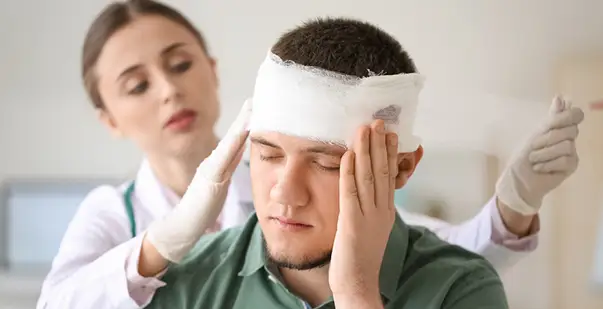
If you find bleeding from a head wound, use a clean cloth or sterile dressing to apply gentle pressure. Be careful and do not press on areas where there could be a skull fracture.
Do not provide any food or drink to the injured person. If they need immediate surgery, they may need to have an empty stomach. Also, swallowing will be difficult for some, especially if they feel disoriented or have a severe head injury.
For headache:
A head injury is any damage to the scalp, skull, or brain. Unlike mild concussion, severe head injuries need immediate medical attention rather than the basics of first aid. So how do you know when to see a doctor? Call 911 if you or another person has the following symptoms:
Most people often confuse severe head injury symptoms with a mild concussion. Misunderstanding the emergencies might lead to life-threatening complications. Here’s how you can differentiate between concussions and head injuries to administer proper first aid steps.
| Aspect | Concussion | Head Injury |
| Scope | Narrow – one specific type of brain injury | Broad – encompasses all injuries to the head region |
| Severity | Mild traumatic brain injury (mTBI) | Can range from minor (like cuts) to severe (skull fractures, severe brain damage) |
| Brain involvement | Always involves the brain being shaken inside the skull | May or may not involve the brain (could be just scalp or skull) |
| Visible damage | Usually, there is no visible external damage | May have visible cuts, bruises, bleeding, or deformity |
| Symptoms | Headache, confusion, dizziness, memory problems, nausea | Varies widely – from minor pain to loss of consciousness, severe neurological deficits |
| Recovery time | Typically, days to weeks for most people | Varies greatly – minutes to permanent disability |
| Examples | Sports-related impact, car accident whiplash | Skull fracture, scalp laceration, severe brain trauma, concussion |
| Aspect | Concussion | Head Injury |
| Meaning | A mild brain injury | Any injury to scalp, skull, or brain |
| Severity | Mostly mild | Can be minor or very serious |
| Brain Involvement | Always affects brain function | May or may not involve the brain |
| Visible Signs | Usually no external damage | Cuts, swelling, or bleeding may be present |
| Common Symptoms | Headache, confusion, dizziness, nausea | Varies from mild pain to major brain changes |
| Recovery | Days or weeks | Minutes to long term |
| Examples | Sports impact, car crash jolt | Scalp wounds, skull fracture, severe brain injury |
Once your concussion or head injury is diagnosed, you need to follow a proper recovery plan to heal and prevent further complications. Here is what you should follow during your recovery period:
You do not need complete bed rest, but you should keep things quiet and calm. Do this during the early period:
For pain: Use acetaminophen in the first day. Ask a doctor before using ibuprofen or aspirin.
When symptoms start easing, you can bring back simple mental tasks. Start small. You can try:
Increase the time only when symptoms stay steady. Returning to school or work does not mean you are ready for sports.
You must not return to sports on the same day as the injury.
Use this simple six-step plan with your doctor’s advice:
Each step usually needs at least one full day. If symptoms return, rest and go back to the earlier step once you feel stable.
If headaches, dizziness, nausea, or mental fog return at any point, slow down. Moving too fast can delay recovery.
Common misconceptions about first aid for concussion can compromise outcomes. Let us clear the myths and state the facts about concussion care.
While you should monitor someone closely for the first few hours after a head injury, once a doctor has cleared them, letting them sleep is perfectly fine.
Myth 2. “If There’s No Blood or Visible Injury, It’s Not Serious”
Your brain can bounce around inside your skull without any external damage showing up. Some of the most dangerous brain injuries happen with zero visible signs.
Ice can help with swelling from bumps and bruises. But head injuries might happen inside your skull, and focusing only on external concussion treatment at home might make you miss serious warning signs.
The brain is complex, and symptoms can be delayed or subtle. You can have a serious brain injury and still be able to walk, talk, and seem normal for hours or even days. So never assume someone is fine just because they seem normal right after the injury.
Prevention is always better than seeking treatment. Let us list out some ways so that you can prevent the risk of concussions or head injuries happening in the first place.
Head injuries affect millions annually. Your response in those critical first minutes determines recovery outcomes. Learn to recognize the symptoms and steps for first aid for a concussion to prevent secondary injuries. With proper care, most people can return to work, school, and many other activities within a few days or weeks. However, remember the guide is intended for general educational purposes only and does not replace professional medical advice, diagnosis, or treatment. If you experience a head injury or suspect a concussion, call 911 or seek immediate emergency medical assistance.
Don’t wait until an emergency strikes. Enroll in our comprehensive online first aid course today. Our 100% online, self-paced course provides thorough coverage of symptom recognition, evidence-based first-aid steps, and critical guidelines for when to seek emergency medical care.
Read More:
Subscribe
Search Here
Select Courses
Recent Posts
Categories