





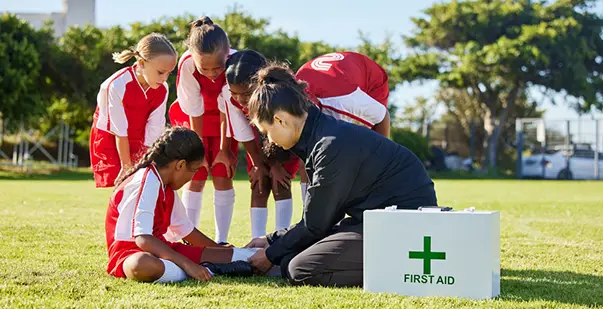
Extreme Sports First Aid: Injury Prevention and Response
Mar 12, 2026

Last Updated On: February 10, 2026
During an emergency, quick action can mean the difference between life and death. Yet many bystanders hesitate to perform CPR(Cardiopulmonary Resuscitation) because of fear or self-doubt. Fear of getting it wrong, fear of being sued, or paralysis under pressure all prevent people from acting. In January 2023, almost 7 in 10 Americans reported that they would not feel at ease assisting if someone collapsed.
That same year, the unexpected on-field collapse of NFL player Damar Hamlin during Monday Night Football ignited a wave of national awareness about CPR. By 2025, this momentum led to 17.7 million Americans feeling prepared to deliver CPR, and confidence increased from 33% to 39%. These numbers show that awareness and training can truly boost public confidence and readiness to save lives. This guide will uncover conditions that necessitate CPR, debunk common myths, and discuss how training, legal protection, and practice can prepare you to take courageous action.
It’s completely natural to be nervous or frightened at the thought of performing CPR on a real person. You’re not alone; even professionals sometimes freeze. Below are five common fears of performing CPR that people face:
“What if I do it wrong and make it worse?” This is probably the most common fear of performing CPR. People worry that they are not using the proper technique or will make the wrong move. These fears can prevent potential rescuers from stepping in.
What to Do Instead: Use Hands-Only CPR. Push hard and fast (100 – 120/min) in the center of the chest. Imperfect CPR is better than no CPR.
“If I try CPR and the victim dies, am I going to be in trouble or sued?” This liability fear is the greatest fear for the majority of bystanders. Fear of legal repercussions can terrify people into doing nothing.
What to Do Instead: Step in confidently. Know that the law generally protects bystander rescuers if they provide help in good faith.
“CPR might give me diseases.” Traditional CPR for an adult consists usually of rescue breaths (mouth-to-mouth), and some worry about catching an illness from a stranger. There is also a general fear of exposure to a stranger’s body fluids.
What to Do Instead: For adults and teens, do Hands-Only CPR (compressions only). If breaths are needed, use a barrier device if available.
“What if I don’t like the pressure or the sight?” Medical emergencies are so overwhelming. Some people are terrified of panicking, freezing, or being traumatized by the experience. The sight of an unconscious person, the blood and vomit that may have been at the scene, or even the potential for a life-or-death situation in itself can be overwhelming.
What to Do Instead: Listen for dispatcher instructions if you call 911. Afterward, talk it out or debrief, which helps process the event.
“I’m worried that I’ll break their ribs, or that I’m not strong enough physically.” You do need to give firm chest compressions to do CPR, and yes, you can break a rib. Individuals are afraid of injuring the injured person more, or they are concerned about their physical strength and stamina to do CPR properly.
What to Do Instead: Focus on depth and rhythm. A broken rib is far better than a lost life, and even imperfect CPR gives a victim a fighting chance.
“Knowledge helps overcome fear.” One of the most powerful ways to overcome the fear of performing CPR is to get trained. Proper CPR emergency response training gives you the skills and confidence you need so that if an emergency happens, you can spring into action instead of freezing up. Here is how training is valuable in overcoming CPR anxiety:
In a CPR course, you learn the correct procedures step by step and practice them usually on a mannequin. This hands-on practice is crucial. It means the first time you do CPR won’t be on a real person in a high-pressure situation; you’ll have already done hundreds of compressions in class. This experience greatly builds your muscle memory, reduces fear of mistakes, and gives you a real training confidence boost.
Studies have found that people who have CPR training are far more likely to perform CPR in an emergency than those who haven’t been trained. In one 2023 survey, having emergency response training was identified as a key factor that boosts bystanders’ willingness to help during cardiac arrests. If you’ve never been trained, you’re more likely to hesitate. But if you’ve taken even a single class, you’re mentally prepared to some degree and less afraid to step forward.
Another benefit of training is that it keeps you up to date with the latest best practices. Guidelines for CPR can evolve. By getting trained and renewing your certification every couple of years, you ensure that you’re practicing the most effective techniques. This currency of knowledge reduces anxiety, too; you know you’re following what modern experts recommend. Many people fear “not doing it right”; training resolves that by making sure you know the right way.
Good training often includes simulations of emergency scenarios. While it’s not the same as the real thing, it does help you experience a bit of adrenaline in a controlled setting. You might practice responding to an instructor suddenly saying, “You what would you do? This person isn’t breathing!” This kind of role-play builds psychological readiness. So if the day comes when someone collapses in front of you, it won’t be the very first time you’ve thought through the steps.
A very common worry that might stop you from helping in an emergency is the fear of legal consequences. Nobody wants to do a good deed and then get sued for it. Thankfully, Good Samaritan laws exist to protect people who try to help. A few things to know about these laws:
These laws are designed to encourage help without fear of litigation. As long as you act in good faith, aren’t grossly negligent, and don’t intend harm, you’re generally protected.
Disclaimer: This isn’t legal advice; protections vary by state or country.
You’re expected to give care that a “reasonable person” with your training level would provide. That doesn’t mean perfect technique. For non-medical people, simply calling 911 and giving Hands-Only CPR is considered reasonable.
In most places, you are not legally required to give CPR. Good Samaritan protections apply once you choose to act. Laws are there to support people who step in sincerely.
A DNR is a legal order telling medical professionals not to perform CPR. If a valid DNR is clearly presented, you should respect it. If you’re unsure whether one exists, start CPR and call 911 immediately. EMS can confirm directives. For children, DNRs are extremely rare, but if one exists, parents or guardians may present it.
Pro Tip: Always put 911 on speaker. Dispatchers will guide you step by step through CPR until help arrives.
Even with training and knowledge, an actual emergency can be overwhelming. School practice on a mannequin does not equate to practicing on a human being in the middle of a medical emergency. Panic is to be expected for such a sudden situation. Some tips on what to do in case you find yourself panicking in the middle of an emergency:
Before rushing in, check the scene. Make sure it’s safe for you and the victim.
Tap the person and shout to see if they respond. If unresponsive, check for normal breathing. If they’re not breathing or only gasping, start CPR.
Dial 911 immediately or send someone else to do it. Put your phone on speaker—dispatchers will guide you through CPR step by step.
Place your hands in the center of your chest. Push hard and fast:
If someone brings an AED, turn it on and follow the voice prompts. Use it as soon as possible.
If others are present, switch chest compressors about every two minutes to avoid fatigue.
Key takeaway: Panic is expected, but action matters more than perfection. Call 911, start compressions, use an AED, and let dispatchers coach you.
Conquering fear of performing CPR is absolutely possible with the right knowledge, attitude, and support. We’ve explored why individuals are fearful of jumping in and challenged those fears with facts, training, legal protection, and real-life success stories. The bottom line is straightforward: to do something is infinitely better than doing nothing in a cardiac emergency.
With practice and preparation, with learning and teaching, you transform CPR fear into CPR confidence. Together, through spreading CPR awareness, we can create a world in which anybody is prepared to respond at the moment of need. Enroll in a CPR training session today and be ready to respond when most needed. The life you save could be that of someone you know very well, a family member or a friend, or even a stranger who will always be thankful.
Read More:
Subscribe
Search Here
Select Courses
Recent Posts
Categories