





Understanding First Aid: Essential Skills for Everyone to Learn
Aug 06, 2026

Last Updated On: April 10, 2026
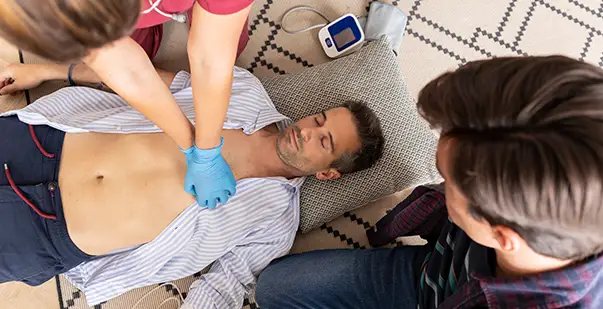
Cardiopulmonary resuscitation or CPR is a life-saving skill used during cardiac emergencies. In the United States, sudden cardiac arrest (SCA) is a major cause of death for individuals below 40 years of age. In SCA, time and technique are critical. Faster, more accurate CPR drastically increases survival odds. However, at times, even trained individuals struggle with correct CPR under pressure. This is often due to a lack of regular, hands-on practice with performance feedback. To ensure efficient training, medical experts and lay responders use smart CPR manikins in 2026. These training devices stimulate human anatomy and provide realistic (accurate) feedback.
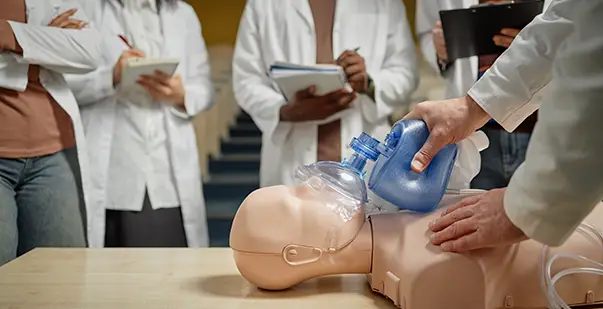
Traditional CPR manikins are simple and sturdy, but they lack advanced functionality and real-time feedback. In comparison, smart CPR manikins solve this issue. These digital resuscitation tools offer real-time data and realistic simulations. In this guide, we’ll examine the latest smart CPR manikin features for 2025.
Smart CPR manikins are portable and increasingly accessible devices that give precise feedback on performing the technique. They are portable and can easily connect to smartphone applications. The connected application provides accuracy insights for compression depth and rate. This focus on precision is important, as high-quality CPR is the single best factor for survival in cardiac arrest. These simpler smart models make training available not just in hospitals, but in schools, businesses, and community centers.
The global training manikins market was valued at about US$3.17 billion in 2024 and is projected to reach US$9.15 billion by 2031, implying rapid growth of smart training tools. These manikin innovations mark a significant advancement in CPR training. Let’s look at the upcoming important trends and features of smart CPR manikins in 2025:
Artificial Intelligence (AI) is the biggest game-changer for smart manikins. They deliver real-time data and intelligent feedback, making every session more interactive and precise.
Smart manikins now work function as guided instructional systems, not just tools. They have sensors everywhere. These sensors track every single action a trainee takes. The AI CPR manikins software then instantly analyzes this data. It checks cardiopulmonary resuscitation depth, ventilation rate, and drug dosages. The system gives immediate, objective feedback. This removes guesswork for the instructor and makes learning faster and more precise.
AI makes the manikin smarter during the training itself. A user’s actions directly affect the manikin’s condition. If a trainee gives the wrong medication, the manikin’s virtual heart rate might drop. The scenario suddenly becomes harder. This adaptive realism forces critical thinking. It trains medical teams to handle the unexpected, just like in a real emergency room. This is a huge step up from older, scripted simulations.
The realistic “feel” and function of manikins are becoming central to training. Modern models incorporate advanced composite materials that closely mimic human tissue and bone structure.
Manikins are now constructed using advanced materials. These materials mimic human skin, bone, and internal tissues. Haptic tech provides physical feedback for procedures like chest tube insertion. Trainees feel the realistic ‘pop’ upon entry. This tactile accuracy is essential for skill development. It builds muscle memory for precise, complex tasks. The high fidelity helps reduce anxiety when moving to real patient care.
Today’s smart manikins can simulate detailed human body functions. They can display heart rhythms on an integrated monitor. They can simulate breathing patterns, like rapid, shallow breaths. They can even have real-time palpable pulses. Advanced models can also simulate patient trauma conditions. Trainees learn to control this bleeding using a tourniquet. This level of detail prepares trainees for a wide range of patient conditions, from cardiac arrest to severe trauma.
Technology has significantly reduced geographic limitations. Smart manikins now connect learners, instructors, and data systems across multiple locations.
All performance data from a training session is now instantly saved to the cloud. It helps training professionals to track students’ progress easily. The system monitors performance trends across the class. So, they can identify the skill gaps across the group. This centralized method benefits large hospital networks by ensuring a uniform training standard across sites.
For example, a rural medical team can train while an instructor supervises remotely. That’s tele-simulation. Smart manikins connect wirelessly. They allow remote instructors to observe, talk to the team, and even control the manikin’s vital signs in real-time. This expands access to top-tier medical education. It is especially useful for emergency response teams that are widely dispersed. The growth in online learning is a major driver for this trend.
Virtual Reality (VR) and Augmented Reality (AR) are blending with physical manikins. This will enhance both technical and emotional readiness.
Trainees can wear an AR headset while working on the manikin. The headset might display a digital overlay onto the physical manikin. This could show the real-time position of internal organs. It could show the path of an IV needle insertion. The trainees can see internal anatomy while keeping their hands engaged with the physical model.
Hybrid simulation combines a physical manikin with a virtual environment. For example, a student might treat a manikin in a simulation lab. Meanwhile, a trained actor appears on a screen via video link, playing the role of the patient’s worried family member. This forces the trainee to manage both the medical emergency and the complex human communication side of care. This is known as non-technical skills training.
Manikins are becoming easier to use and more affordable for different groups. Modular systems are designed to serve multiple training levels without high replacement costs.
Modern manikins are designed with modular components. Training facilities can purchase a standard manikin body. They can attach advanced features like trauma limbs or specialized heads when needed. This approach allows one manikin to serve many training purposes, from a simple first-aid course to an advanced surgical procedure.
Digital resuscitation tools are used to measure key parameters of CPR events, they align with the current resuscitation science and are sponsored by the American Heart Association. Trainees who practice using ROI-enabled tools can improve their life-saving skills and performance successfully.
Read More: The Rise of Smart CPR Manikins: Real-Time Feedback and Advanced Simulation
Understanding good Samaritan law is not enough to help victims of cardiac arrest. You must be trained in providing correct compressions to save the person’s life. Smart manikins provide several benefits for healthcare providers. They also help improve CPR outcomes in patients during emergencies in the following ways:
Smart CPR manikins guide learners to follow CPR standards correctly. With real-time feedback on depth, rhythm and hand placement, trainees can make precise adjustments as they go. This minimizes bad habits and reinforces correct techniques.
Over time, repeated exposure to this feedback sharpens accuracy and enhances consistency. This improvement is especially needed for healthcare professionals who must meet certification standards. The result is a higher chance of delivering effective CPR during emergencies.
Retaining skills is a key challenge when learning CPR techniques. Smart manikins encourage learners to practice through gamification and performance tracking. Short, frequent sessions are more effective for long-term retention than one-time training.
The devices also allow users to revisit specific skill areas they find challenging. Learners reinforce memory and build long-lasting competence as they return for practice.
Confidence plays a key role in emergency response. Smart manikins instill confidence by validating correct actions in real-time. As users receive positive feedback during training, they build self-assurance in their ability to perform under pressure. This psychological reinforcement helps reduce hesitation when seconds matter most.
Learners also become more familiar with the physiological feedback of proper compression, such as the resistance felt during a real emergency. With smart CPR training, confidence becomes a byproduct of informed and repeated practice.
Traditional CPR instructors often depend on visual observation to assess a student’s performance, which can be subjective. Smart manikins get rid of this ambiguity by offering data-based evaluations. Instructors can use session metrics to provide specific, actionable feedback. Institutions can also use the data to maintain consistent standards across all trainees.
A CPR manikin ensures that everyone who completes the course meets a uniform competency level. Meanwhile, here is an overview of some of the use cases of a smart CPR manikin in the U.S.
Hospitals and medical schools are among the earliest adopters of smart CPR manikins. These settings demand the highest level of CPR accuracy and compliance with guidelines. Smart manikins provide valuable insights needed by medical professionals to upskill themselves.
Regular sessions can be used to test emergency readiness and identify gaps in team coordination. Their data can also support performance reviews and credential renewals.
CPR is becoming a mandatory skill in many school curriculums. Smart manikins help make this training more engaging and effective for students. Gamified challenges, visual feedback, and mobile integration appeal to tech-savvy learners.
Group training functions also allow entire classes to practice at once under teacher supervision. Early exposure to CPR skills allows students to act confidently in emergencies.
Some companies also integrate CPR training into their safety and corporate health initiatives. Smart manikins make it easier to host efficient, data-rich sessions for large employee groups. Employees benefit from learning key life-saving skills in a format that’s interactive and non-intimidating. Meanwhile, companies gain peace of mind knowing their workforce is prepared. It also improves the organization’s public image as a safety-conscious and socially responsible entity.
NGOs, health departments, and volunteer organizations use smart manikins to train civilians during CPR awareness drives. Portable models allow for community workshops in malls, parks, and public spaces.
The real-time feedback system ensures that participants leave with accurate and usable skills. Some programs also collect anonymous performance data to improve future campaigns. This approach ensures CPR education reaches a broader audience with measurable impact.
Smart CPR manikins are more than just an upgrade; they are a reinvention of how life-saving skills are taught and retained. They empower learners to practice more frequently, retain information longer, and perform more confidently. This involves combining real-time feedback, data analytics, and immersive simulations. As technology transforms gradually, we can expect even more enhancements, such as AI-based coaching, VR scenarios, and cloud-based global training systems.
Do you want to receive better and more advanced CPR training? Then, it’s high time you enroll in an online CPR or first aid certification. It allows you to learn basic life-saving skills with hands-on practice in using CPR manikins and tools.
Read More:
Subscribe
Search Here
Select Courses
Recent Posts
Categories