





Extreme Sports First Aid: Injury Prevention and Response
Mar 12, 2026
Last Updated On: febrero 9, 2026
Learning cardiopulmonary resuscitation or knowing how to do CPR on adults is a necessary and life-saving procedure used when one is having a heart attack.
Performing CPR, while putting the patient in a recovery position, helps keep oxygenated blood flowing to the brain and other essential organs until medical professionals arrive.
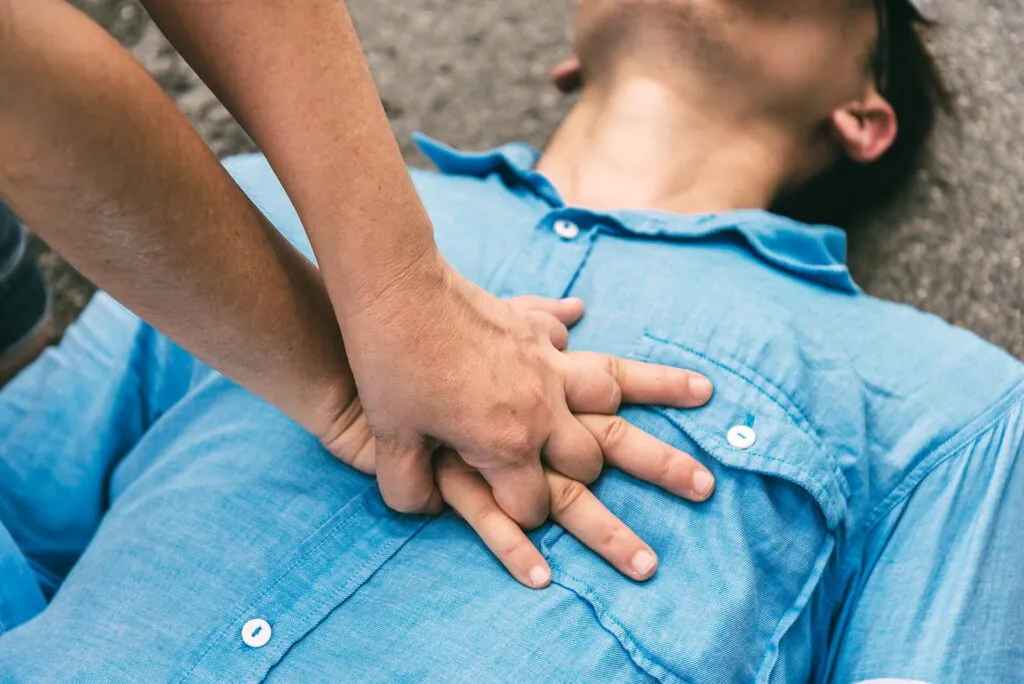
Without starting hands-only CPR immediately, using the heel of your hand and the right pressure for 30 chest compressions, the lack of oxygenated blood can cause permanent damage to vital organs within only a few minutes.
In worst cases, the patient stops breathing and dies in eight-ten minutes when they are not in the recovery position and do not have immediate medical help. The layperson must focus on helping the patient in restoring their heart rhythm and then on opening the airway.
The ratio has to be 30 chest compressions to 2 rescue breath for performing CPR on adults. The hands must put the right pressure on the center of the chest to recover the patient on time.
Note that even if you’re not properly trained, it is always recommended that you offer at least some of the following life-saving assistance that also includes the lessons on head-tilt/chin-lift technique.
This intervention from you as a responsible bystander could make a difference in a dying patient’s life and settle the patient properly in a recovery position.
Note: Take care of your body weight not just your arms when you are preparing to give CPR to adults.
Get CPR Certified Today
Learn essential life-saving skills with our certified CPR course
Note : If the chest does not rise with the initial rescue breath, re-tilt the head before delivering the second breath. If the chest doesn’t rise with the second breath, the person may be choking. After each subsequent set of 30 chest compressions, and before attempting breaths, look for an object and, if seen, remove it.
It is always recommended to take an accredited first-aid training course which includes CPR training. This information could end up being life-saving for you or a loved one. However, even without training, you can still assist someone in need by calling 911 before attempting CPR to the best of your ability. The emergency dispatcher will instruct you on the proper procedure until help arrives.
American CPRCare Association provides quality healthcare training, as well as first aid and CPR courses, through our online portal. For more information about administering CPR, contact us at 1-888-808-9109 or visit our website today.
Subscribe
Error: Formulario de contacto no encontrado.
Search Here
Select Courses
Recent Posts
Categories