




Public Confidence in Performing CPR Rises — Survey Insights & What That Implies
Abr 14, 2026
Last Updated On: marzo 26, 2026
Snakebites are rare but potentially serious injuries in the United States. Most occur during outdoor activities such as hiking, gardening, or working in rural areas. According to the World Animal Foundation, about 7,000 to 8,000 people suffer venomous snakebites annually in the United States. These numbers highlight the importance of knowing proper snake bite first aid, particularly when providing immediate emergency care. Moreover, deaths are uncommon when rapid medical care is provided. This guide explains how to recognize venomous snakebites, spot early symptoms, give effective first aid, and understand when to seek emergency care.
A snakebite is an injury caused when a snake’s fangs puncture the skin. Some snakes inject venom into the body. It is a toxin that can affect the nervous system, blood, or tissue, based on the species.
Some snakes may deliver a dry bite with no venom. Even non-venomous bites require prompt medical evaluation. Quick care helps clean the wound, prevent infection or tetanus, and ensure no fragments of the fang remain in the skin.
In the U.S., most snake bite incidents happen between April and October when snakes are active and people spend more time outdoors. Those who work outside, hike in tall grass, walk barefoot, or reach into hidden spaces are at higher risk. Basic snake bite first aid knowledge can make a critical difference before medical help arrives.
The safest response is to stay at least 6 feet away from any snake. Most bites happen when people try to catch, kill, or handle them. If bitten, do not attempt to capture or kill the snake. If it’s safe, you may remember its color, size, and markings from a distance to share with emergency responders.
Some clues that a snake may be venomous in the U.S.:
Venomous snakes typically have a triangular or distinctively shaped head, unlike the more rounded heads of non-venomous snakes. For example, pit vipers like rattlesnakes, copperheads, and cottonmouths have triangular heads.
Note: Head shape isn’t always a reliable way to identify venomous snakes. Some harmless species, such as hognose snakes and watersnakes, can flatten their heads to appear triangular and mimic venomous ones.
Many venomous snakes in North America have vertical, slit like pupils. However, coral snakes, which are also venomous, have round pupils. It is important to understand these variations when attempting to identify a potentially venomous species.
Many venomous snakes, such as pit vipers, have heat-sensing pits between their eyes and nostrils to detect prey. This is another way to detect whether a particular reptile is venomous or not.
Venomous snakes often have thicker bodies compared to non-venomous snakes. Some venomous snakes, like rattlesnakes, produce a rattling sound as a warning before striking.
Snake bite symptoms can often vary based on what type of snake that bit you. A non-venomous snake can usually cause:
Venomous snake bites can produce more severe symptoms, such as:
Pain may not occur immediately after every venomous bite, so the absence of pain does not rule out venom exposure.
Sometimes, the symptoms of a snake bite can be quite severe and should be treated as a medical emergency. Make sure to call 911 or your local emergency services number immediately to help the person get treated. Meanwhile, the symptoms include:
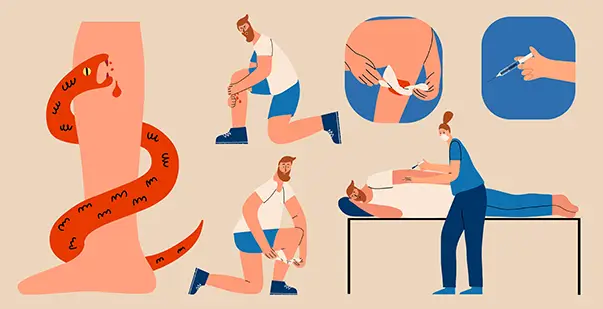
The first few minutes after a snake bite are critical. Proper snake bite first aid can delay the spread of venom and improve survival until professional help arrives. In that case, bystanders should limit care to safe, evidence-based actions as discussed below and call 911 first:
Always stay calm if you are helping someone. Panic often causes a person’s heart rate to increase as venom spreads. You should also keep the bitten person still and calm and avoid walking or running.
Gently remove any rings, watches, or tight clothing near the bite site as soon as possible. This prevents constriction and reduces the risk of circulation problems if swelling occurs.
Immobilize the affected limb below heart level. Do not cut the wound, attempt to suck out venom, apply ice, or wrap the limb tightly.
Once the patient reaches a medical facility, emergency care for snake bites begins with stabilizing breathing, circulation, and consciousness. Here are the next course of steps to follow in such cases:
A healthcare provider will recognize all the key symptoms, bite type, and clinical presentation to clean the wound properly. This will also help them determine which venom has entered the victim’s bloodstream. In a few cases, they may also recommend laboratory tests like blood clotting time and kidney function to evaluate the severity of envenoming. Most U.S. hospitals use coagulation panels (PT/INR, aPTT) and complete metabolic panels (CMP).
Antivenom is often considered the primary treatment for venomous bites and is specifically administered intravenously. In the U.S., antivenoms are typically species-group specific (e.g., Crotalidae polyvalent immune Fab for pit vipers) rather than exact species-based dosing. Antivenom helps neutralize the circulating venom, but it must be administered only under medical supervision to avoid allergic reactions. Please note that not every bite (e.g. dry bite or mild local effects) requires antivenom.
What you don’t do after a snakebite can be just as important as what you do. Panic and outdated “remedies” can make the situation far worse. They can speed up venom spread, increase tissue damage, or delay lifesaving care. Here are the key actions you should always avoid after a snakebite to keep the person as safe as possible until help arrives:
Snake bites may prove fatal for several victims. Individuals should be knowledgeable about snake bite first aid, especially in countries with varied topographies like the United States. Not only healthcare professionals, but individuals from other professions can also learn more about emergency care to help victims in such emergencies. This helps them recognize early symptoms and provide proper care to the victims of snake bites. If you want to learn more about dealing with bites and stings, enroll in a first aid certification now. It’s valid for two years and helps you learn all the basics of dealing with snake bites.
1. What should I do immediately after a snakebite?
Stay calm and keep the bitten person still to slow venom spread. Remove tight items and immobilize the affected limb below heart level, then call emergency services immediately.
2. Should I try to suck out the venom or cut the bite?
Do not cut the wound or try to suck out the venom, as these actions can worsen injury and infection risk. Avoid outdated treatments like tourniquets or ice and get professional medical help right away.
3. How is a venomous snakebite treated at the hospital?
Medical care includes stabilizing vital signs, administering antivenom to neutralize venom, managing pain, and monitoring for complications. Additional treatments may include fluids, blood transfusions, or surgery if required.
Read More:
Subscribe
Error: Formulario de contacto no encontrado.
Search Here
Select Courses
Recent Posts
Categories